
Book Overview
Book: Essentialism: The Disciplined Pursuit of Less
Author: Greg McKeown
Category: Productivity / Focus / Personal Development
Summary
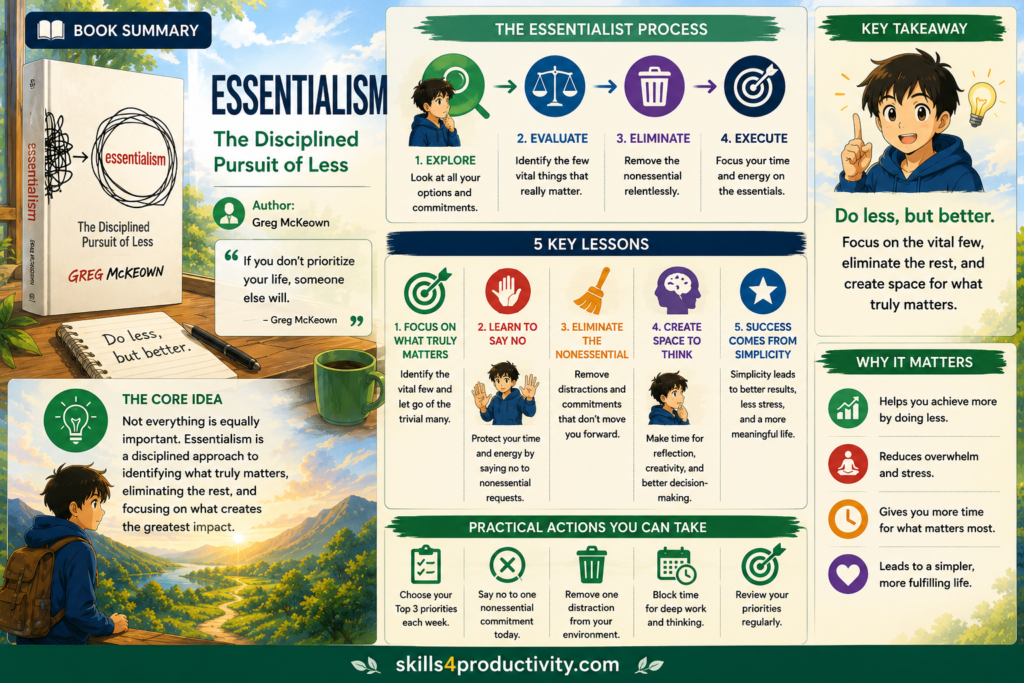
Have you ever reached the end of a busy day feeling exhausted, yet accomplished very little that truly mattered? Many people mistake being busy for being productive, filling their calendars with meetings, commitments, and endless to-do lists. Greg McKeown challenges this way of thinking in Essentialism: The Disciplined Pursuit of Less.
Rather than encouraging readers to do more, the book presents a different philosophy: identify what is genuinely important, remove everything that isn’t, and devote your energy to the few things that create the greatest value. This approach isn’t about becoming lazy or avoiding responsibility. It’s about making intentional choices so that your time, energy, and attention are invested where they matter most.
In this Essentialism summary, we’ll explore the book’s main ideas, practical lessons, memorable quotes, and how you can apply its principles in your daily life. Whether you’re a student, entrepreneur, manager, or simply someone who feels overwhelmed by constant demands, this guide will help you understand why “less but better” is such a powerful mindset.
About the Author
Greg McKeown is a leadership and productivity expert who has spent years studying why successful people often become overwhelmed by opportunities. Through consulting, speaking engagements, and research, he noticed a common pattern: many high achievers gradually lose focus because they say yes to too many projects and responsibilities.
His work encourages individuals and organizations to become more selective about where they invest their time. Instead of celebrating busyness, McKeown advocates thoughtful decision-making, deliberate priorities, and meaningful work. Essentialism became an international bestseller because its message resonates with anyone struggling to balance endless demands in today’s fast-paced world.
What Is Essentialism About?
At its heart, Essentialism is about making deliberate choices. Modern life constantly presents new opportunities, requests, and distractions. While many people believe success comes from saying “yes” to everything, McKeown argues that every commitment comes with a hidden cost. When you agree to one task, you inevitably sacrifice time and energy that could have been spent on something more meaningful.
The book encourages readers to question every obligation instead of accepting it automatically. Rather than asking, “How can I fit more into my schedule?” the essentialist asks, “What deserves my attention the most?”
This shift in perspective changes how we approach work, relationships, and personal goals. Instead of measuring success by how busy we are, we begin measuring success by the quality and impact of the work we choose to do.
McKeown also emphasizes that essentialism is an ongoing discipline rather than a one-time decision. Priorities evolve, responsibilities change, and new opportunities appear regularly. Developing the habit of regularly reviewing commitments helps ensure that your actions remain aligned with your long-term goals.
Key Lessons from Essentialism
1. Focus on What Truly Matters
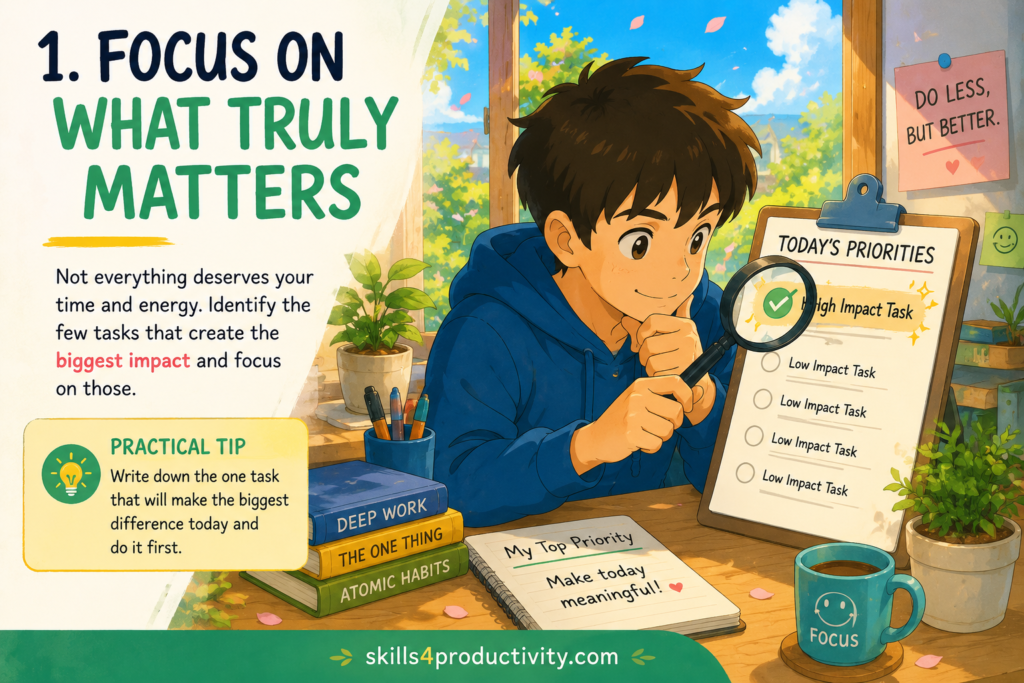
Many people believe that being productive means doing more, but Greg McKeown challenges this idea. He explains that not every task deserves the same amount of attention. Some activities create far greater results than others, and identifying these high-impact tasks is the key to making meaningful progress.
Instead of filling your schedule with endless commitments, focus on the few things that truly align with your goals and values. By directing your time and energy toward what matters most, you can achieve better results without feeling constantly overwhelmed.
💡 Practical Tip:
Before starting your day, write down the one task that will have the biggest positive impact. Complete it before moving on to less important work.
2. Learn to Say No Without Feeling Guilty
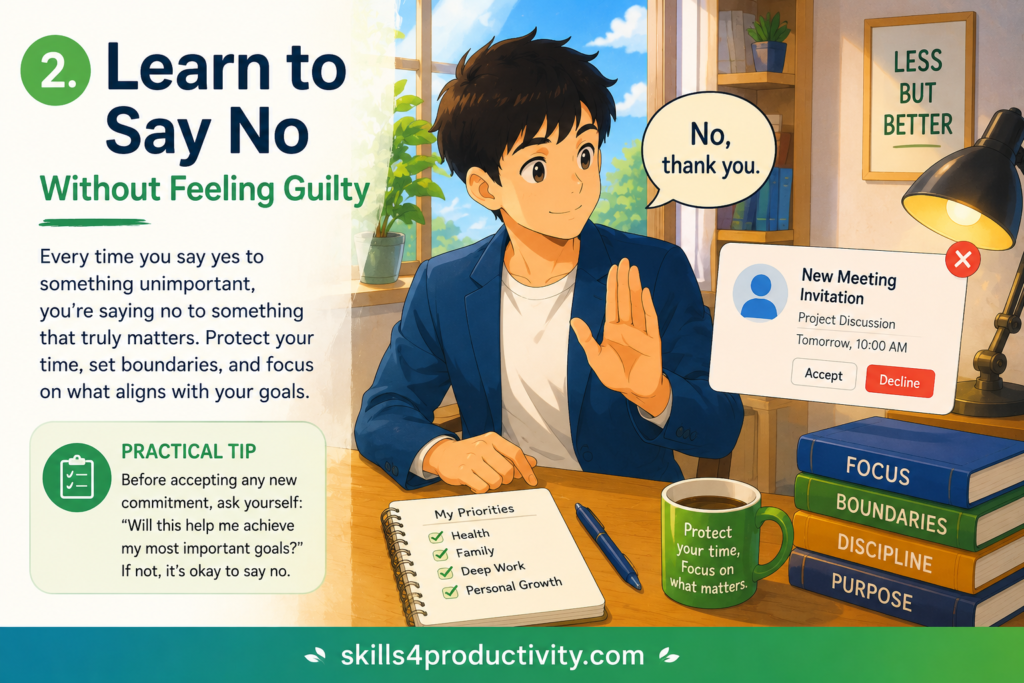
One of the biggest reasons people become overwhelmed is that they agree to too many requests. Every “yes” takes time, energy, and attention away from something more important. McKeown explains that saying no isn’t selfish—it’s a necessary skill for protecting your priorities.
Learning to decline unnecessary meetings, projects, or commitments allows you to focus on work that truly matters. While saying no can feel uncomfortable at first, it creates the space needed to produce higher-quality work and maintain a healthier balance between work and personal life.
💡 Practical Tip:
Before accepting any new commitment, ask yourself: “Will this help me achieve my most important goals?” If the answer is no, consider politely declining.
3. Eliminate the Nonessential
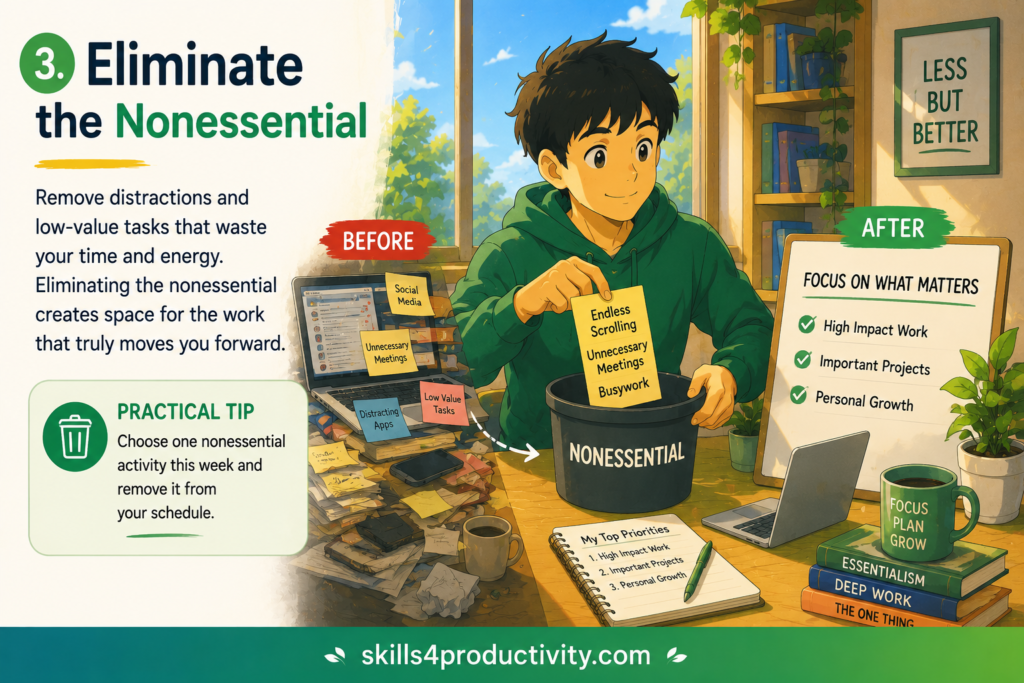
Modern life is full of distractions. From unnecessary meetings and constant notifications to endless emails and social media, it’s easy to spend hours on activities that contribute very little to your long-term goals.
Essentialism encourages regularly reviewing your commitments and removing anything that doesn’t add meaningful value. By eliminating low-priority tasks, you free up time and mental energy for the work that has the greatest impact.
Remember, simplifying your schedule isn’t about doing less for the sake of it—it’s about creating room for your best work.
💡 Practical Tip:
Choose one recurring activity this week that doesn’t add value and remove it from your schedule.
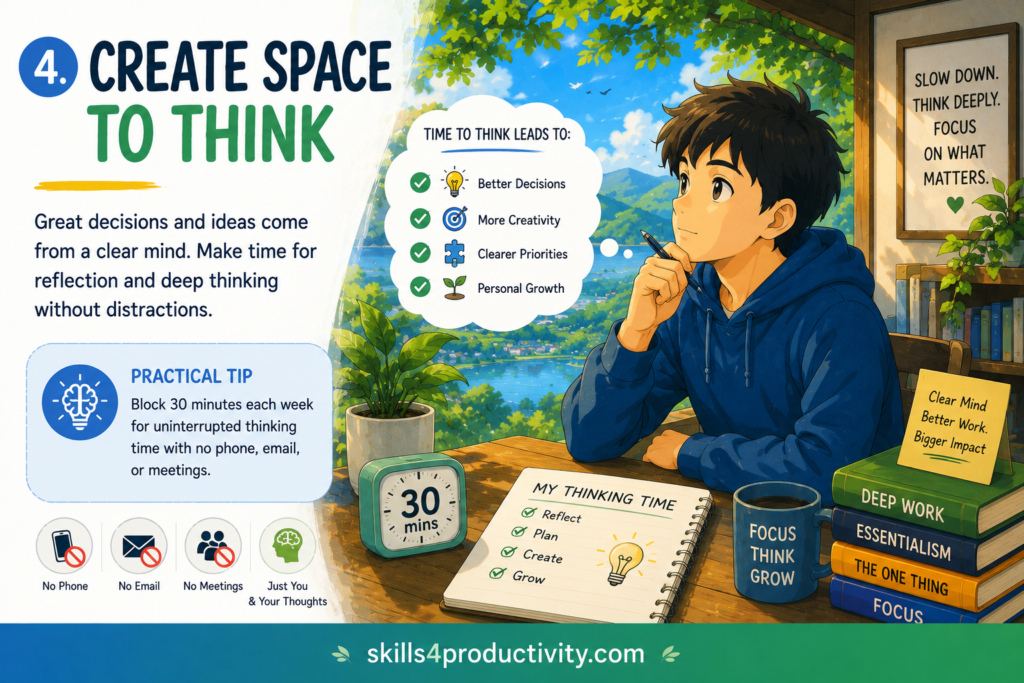
4. Create Space to Think
In today’s always-connected world, quiet moments have become increasingly rare. Greg McKeown argues that making time for reflection is essential for better decision-making, creativity, and problem-solving.
Instead of jumping from one task to another, schedule regular breaks to think without distractions. Whether it’s taking a walk, journaling, or simply sitting quietly, these moments allow your mind to process ideas and identify what truly deserves your attention.
Creating space to think isn’t wasted time—it’s an investment in making better choices.
💡 Practical Tip:
Block 30 minutes each week for uninterrupted thinking time with no phone, email, or meetings.
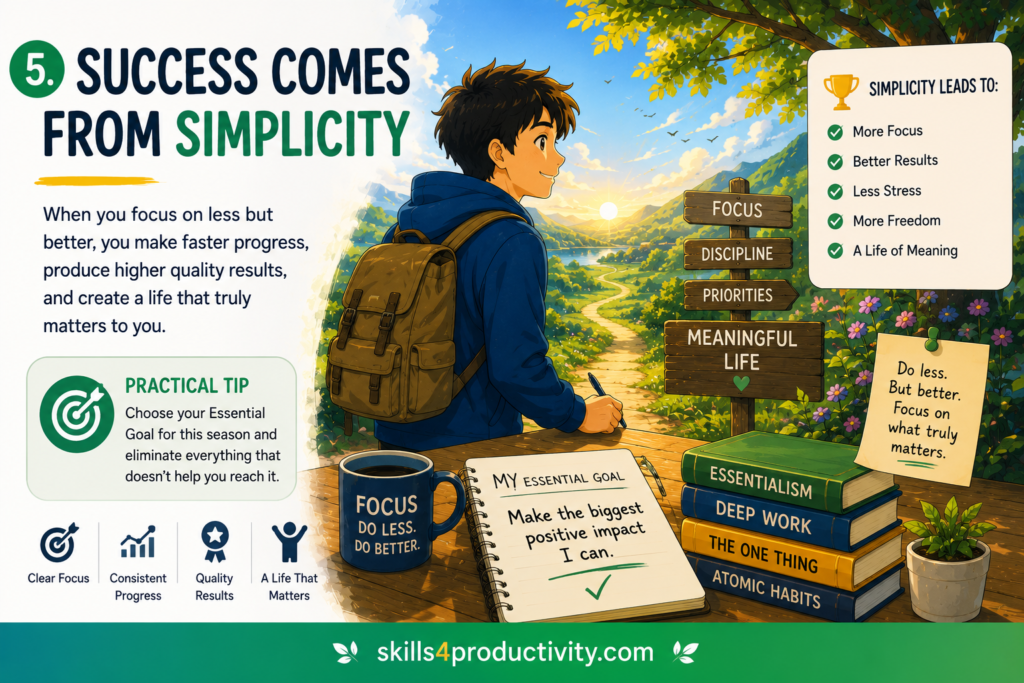
5. Success Comes from Simplicity
One of the most memorable ideas in Essentialism is that doing fewer things often leads to better results. Rather than spreading yourself thin across dozens of responsibilities, concentrate your efforts on a small number of meaningful goals.
When your attention isn’t divided, you can produce higher-quality work, make better decisions, and experience less stress. Over time, this disciplined approach leads to greater consistency and long-term success.
Simplicity isn’t about lowering your ambitions—it’s about removing distractions so your best work can shine.
💡 Practical Tip:
At the end of each week, review your to-do list and remove any task that doesn’t support your top priorities.
Best Quotes from the Book
“If you don’t prioritize your life, someone else will.”
💡 Why it matters
This quote reminds us that every commitment has an opportunity cost. When we fail to choose our priorities, other people and circumstances will choose them for us.
“Essentialism is not about doing more things; it’s about doing the right things.”
💡 Why It Matters
Being busy doesn’t always mean being productive. This quote encourages us to stop chasing every opportunity and instead invest our time and energy in the few activities that create the greatest impact.
“Sometimes what you don’t do is just as important as what you do.”
💡 Why it matters
Success isn’t only about taking action. It’s also about intentionally avoiding distractions that pull you away from meaningful work.
Final Thoughts
Essentialism isn’t simply a book about productivity—it’s a guide to making better decisions about how you spend your time and energy. Greg McKeown encourages readers to stop chasing every opportunity and instead focus on the work that creates the greatest impact.
The principles in this book are simple, but applying them consistently can transform the way you work and live. Whether you’re managing a busy career, running a business, or balancing personal responsibilities, Essentialism offers a practical reminder that doing less often leads to achieving more.
If you’re looking for a productivity book that emphasizes clarity, focus, and intentional living, this is one of the best places to start.
Who Should Read This Book:
👨💼 Busy Professionals
Focus on high-impact work instead of endless tasks.
🚀 Entrepreneurs
Make better decisions and prioritize growth opportunities.
🎓 Students
Study smarter by eliminating distractions.
🌿 Anyone Seeking Balance
Simplify your life and focus on what truly matters.
📚 Get the Book
Enjoyed this summary? Essentialism is worth reading if you want to dive deeper into Greg McKeown’s practical strategies for focusing on what truly matters.
Related Book Summaries:
Key Takeaways
✔ Focus on fewer priorities.
✔ Learn to say no confidently.
✔ Remove distractions.
✔ Protect time for deep thinking.
✔ Simplicity creates better results.
Disclosure: This article may contain affiliate links. If you purchase through these links, Skills4Productivity may earn a commission at no additional cost to you.