
Habits shape much of our daily behavior, from brushing our teeth to checking our phones. Many of these actions happen automatically, without conscious thought.
The concept of the Habit Loop explains how habits form and why they are so powerful. This idea was popularized by Charles Duhigg in his book The Power of Habit.
Understanding the habit loop can help you break bad habits and build better ones, leading to improved productivity, health, and personal growth.
What Is the Habit Loop?
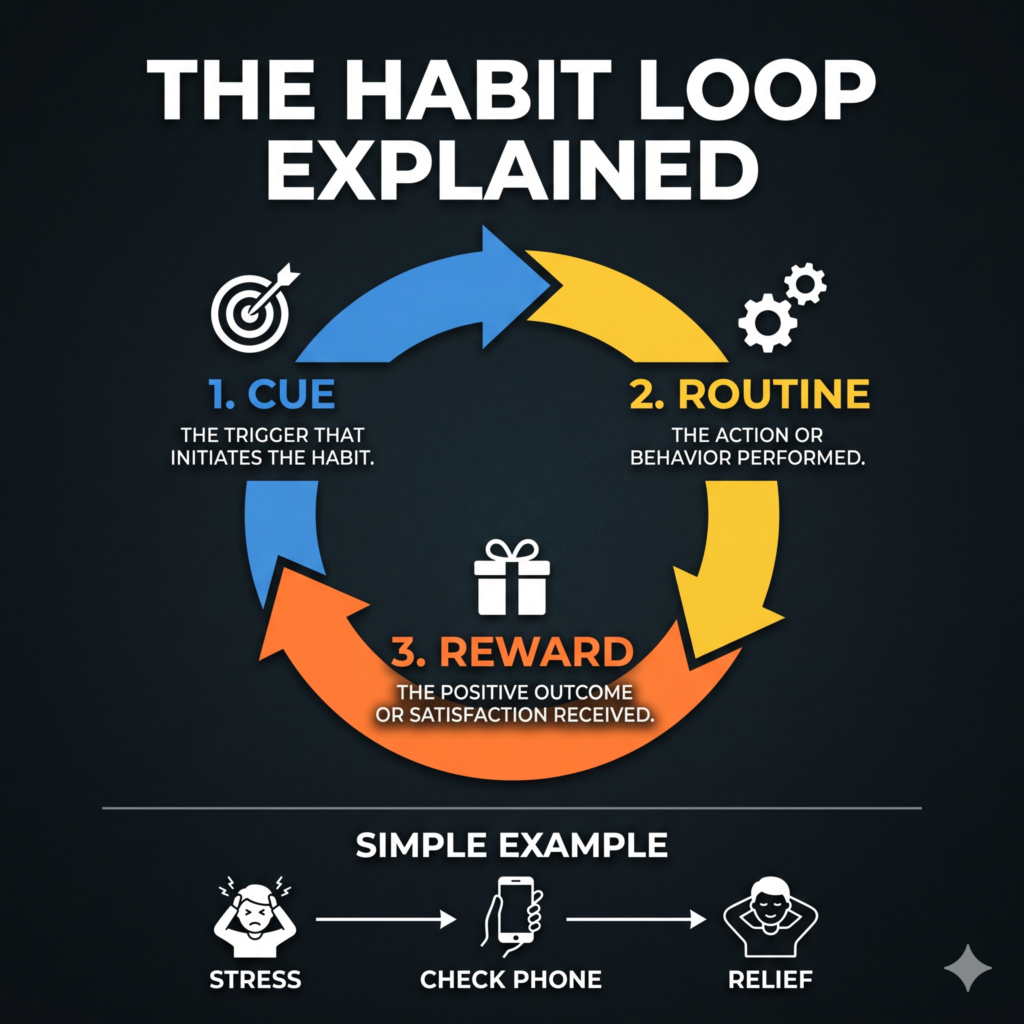
The Habit Loop is a simple neurological pattern that governs how habits work. It consists of three key components:
- Cue
- Routine
- Reward
When this loop repeats consistently, the brain begins to automate the behavior, turning it into a habit. This process allows the brain to save energy by converting repeated actions into automatic routines.
This concept is explained in detail in books like The Power of Habit, which explores how habits are formed and changed.
The Three Parts of the Habit Loop
1. Cue (The Trigger)
The cue is the signal that tells your brain to start a habit. It can be anything that triggers a specific behavior, such as:
- A specific time of day
- A location
- An emotional state
- Seeing a certain object
- Another person’s action
Example: Every morning when your alarm rings, it acts as a cue to start your morning routine.
2. Routine (The Behavior)
The routine is the actual behavior or action that follows the cue. This is the habit itself.
Examples:
- Drinking coffee
- Checking social media
- Going for a walk
- Exercising
- Reading a book
Over time, this behavior becomes automatic.
3. Reward (The Benefit)
The reward is the positive outcome that reinforces the habit. Rewards tell the brain that the behavior is worth remembering.
Examples:
- Feeling energized after coffee
- Relaxation after exercise
- Satisfaction from completing a task
When the brain experiences the reward repeatedly, it begins to associate the cue with the routine. This strengthens the habit loop.
Example of the Habit Loop in Daily Life
Here is a simple example of how the habit loop works.
Cue – Feeling tired in the afternoon
Routine – Drinking coffee
Reward – Feeling more energized
After repeating this pattern several times, the brain automatically links afternoon fatigue with drinking coffee.
How to Change a Habit Using the Habit Loop
One important insight from The Power of Habit summary is that habits cannot simply be removed. Instead, they must be replaced.
The best strategy is to:
- Identify the cue
- Keep the reward the same
- Change the routine
Example:
Cue – Stress at work
Old routine – Checking social media
New routine – Taking a short walk
Reward – Mental relaxation
By replacing the routine, you can reshape the habit loop.
If you want to build better habits consistently, frameworks like those in Atomic Habits can help you design habits that actually stick.
Why the Habit Loop Matters
Understanding the habit loop helps people gain control over their behaviors.
Benefits include:
- Building productive habits
- Breaking bad habits
- Improving focus and discipline
- Increasing long-term success
Many productivity strategies are based on understanding how habits work.
Simple strategies from Tiny Habits also show how small changes can lead to big long-term results.
Related Concepts
Several popular books discuss habits and behavioral change.
You may also enjoy:
Each of these books explains different strategies for building positive habits and improving productivity.
Conclusion
The habit loop explains how habits form and why they become automatic over time. By understanding the relationship between cue, routine, and reward, anyone can start redesigning their habits.
Small changes in daily routines can lead to significant improvements in productivity, health, and personal growth.
Once you understand the habit loop, you gain the ability to take control of your habits instead of letting habits control you.
Disclosure: This article may contain affiliate links. If you purchase through these links, Skills4Productivity may earn a commission at no additional cost to you.