
Book Overview
Book: The Psychology of Money
Author: Morgan Housel
Category: Personal Finance / Mindset / Success
Learn Why Building Wealth Is More About Behavior Than Intelligence
The Psychology of Money by Morgan Housel explores one of the most overlooked truths about personal finance: success with money depends more on how you behave than on how much you know.
Instead of focusing on complex investment strategies or financial formulas, Housel explains why emotions, habits, patience, and long-term thinking have a greater impact on wealth than technical knowledge alone.
Through engaging stories and real-world examples, the book reveals how ordinary people can build extraordinary wealth by making consistent financial decisions, avoiding costly mistakes, and allowing time to work in their favor.
In this summary, you’ll discover the book’s biggest ideas, memorable quotes, and practical lessons you can apply to improve your relationship with money and make smarter financial decisions.
Key Takeaway
Financial success isn’t determined by intelligence—it’s determined by behavior. The people who build lasting wealth are those who consistently save, invest patiently, control their emotions, and think long term.
30-Second Summary
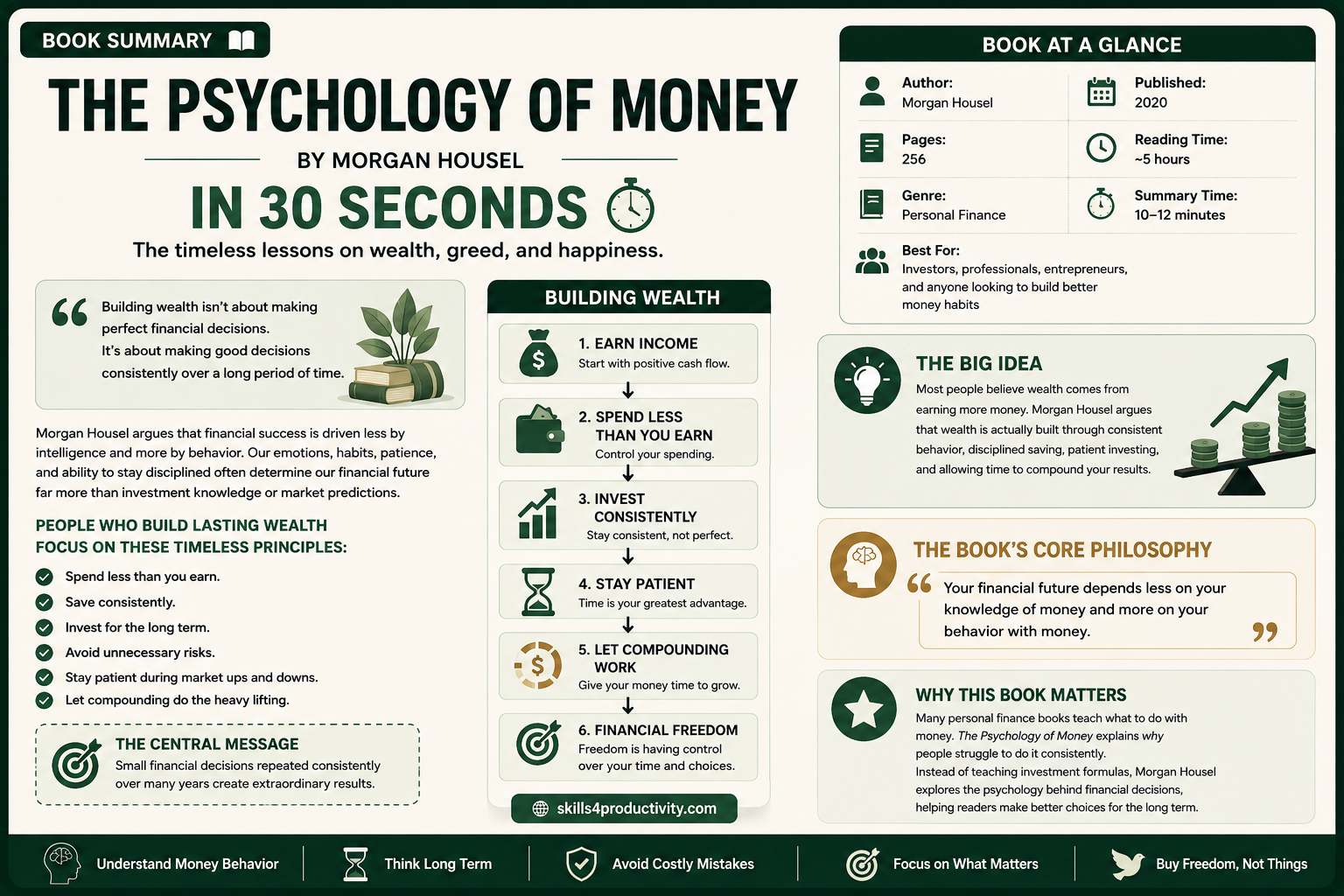
The Psychology of Money in 30 Seconds
If you remember only one thing from The Psychology of Money, let it be this:
Building wealth isn’t about making perfect financial decisions. It’s about making good decisions consistently over a long period of time.
Morgan Housel argues that financial success is driven less by intelligence and more by behavior. Our emotions, habits, patience, and ability to stay disciplined often determine our financial future far more than investment knowledge or market predictions.
Rather than chasing quick profits or trying to outperform everyone else, the people who build lasting wealth focus on a few timeless principles:
- Spend less than you earn.
- Save consistently.
- Invest for the long term.
- Avoid unnecessary risks.
- Stay patient during market ups and downs.
- Let compounding do the heavy lifting.
Key Lessons from The Psychology of Money
1. Financial Success Is About Behavior, Not Intelligence
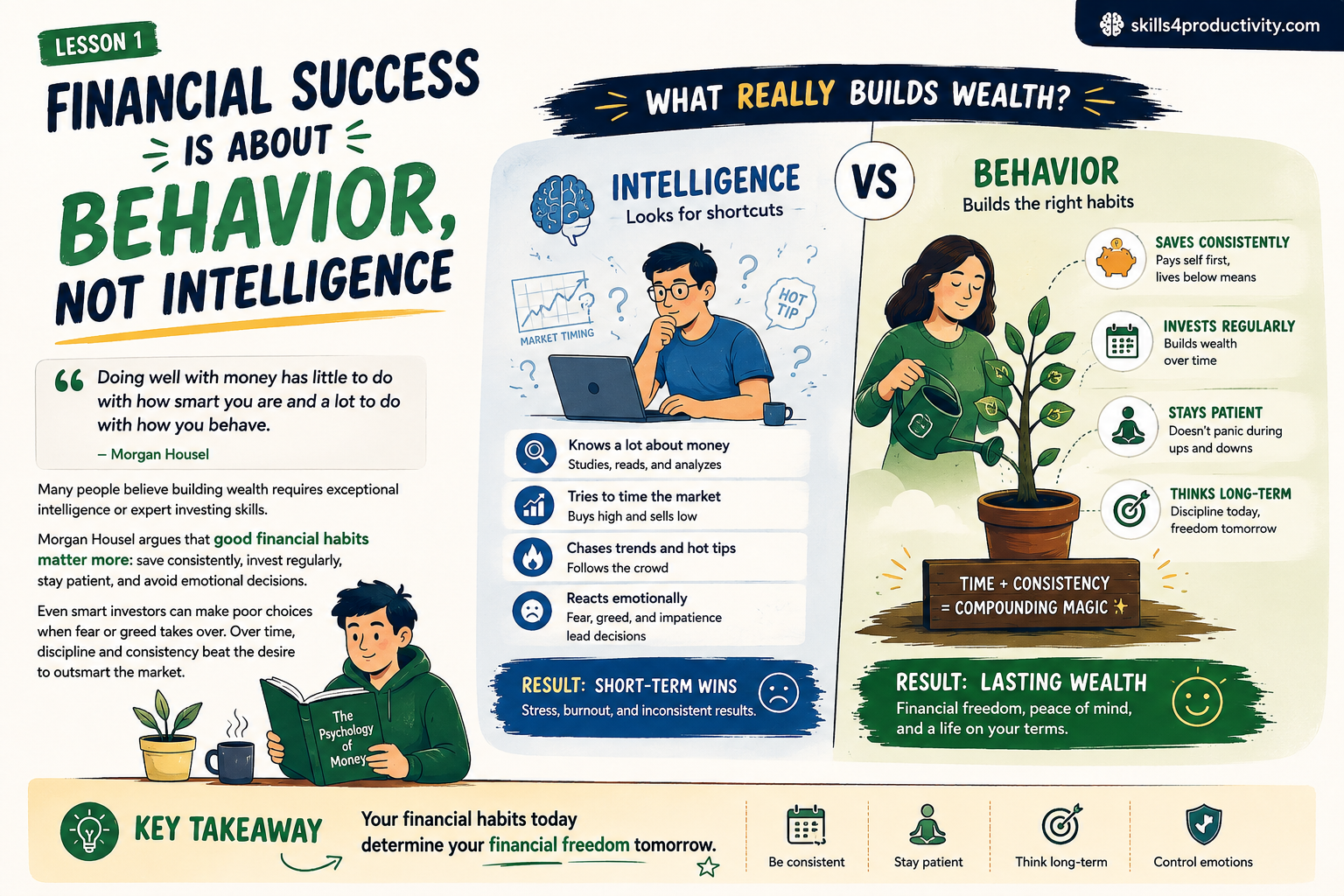
Many people believe building wealth requires exceptional intelligence or expert investing skills. Morgan Housel argues that good financial habits matter more: save consistently, invest regularly, stay patient, and avoid emotional decisions.
Even smart investors can make poor choices when fear or greed takes over. Over time, discipline and consistency beat the desire to outsmart the market.
💡 Key Takeaway
Good financial habits consistently outperform brilliant financial decisions made occasionally.
2. The Power of Compounding
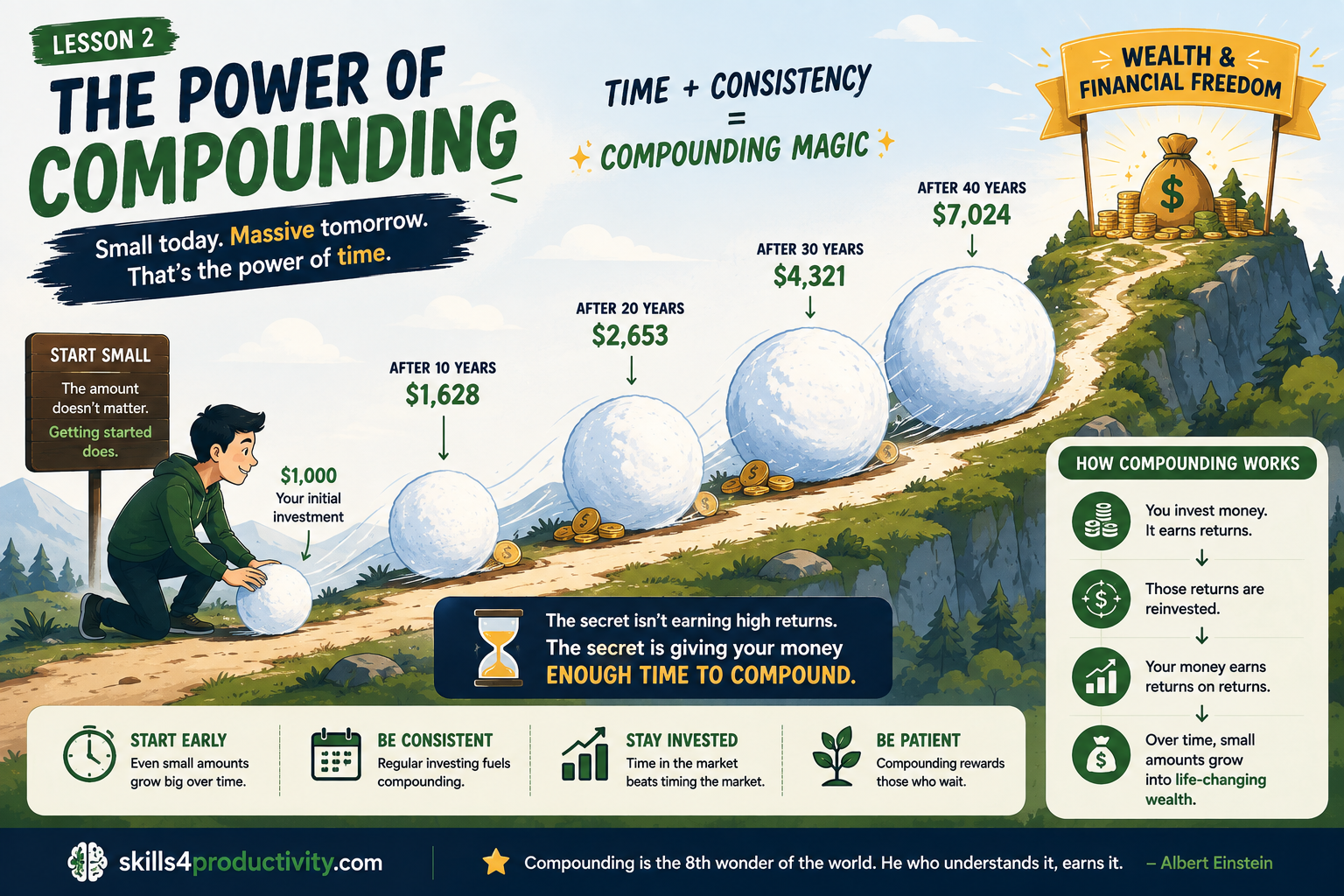
Compounding is one of the most powerful forces in wealth building. Your money earns returns, and those returns can then generate additional returns.
The important part is time. You don’t need extraordinary returns if you can stay invested for a long period. Small amounts invested consistently can grow dramatically because your gains begin generating their own gains.
The biggest advantage isn’t timing the market—it’s giving your money enough time to compound.
💡 Key Takeaway
Start early, stay invested, and let time do the heavy lifting.
3. Wealth Is What You Don’t See
It’s easy to confuse looking rich with being wealthy. Expensive cars, designer clothes, and luxurious homes are visible signs of spending—but they don’t necessarily tell you how financially secure someone really is.
Morgan Housel explains that true wealth is often invisible. Savings, investments, and financial flexibility are what give people the ability to handle emergencies, take opportunities, and control their time.
Rich is what you spend. Wealth is what you keep.
💡 Key Takeaway
True wealth isn’t what people see—it’s the financial freedom your money gives you.

4. Avoid Big Mistakes More Than You Chase Perfect Decisions
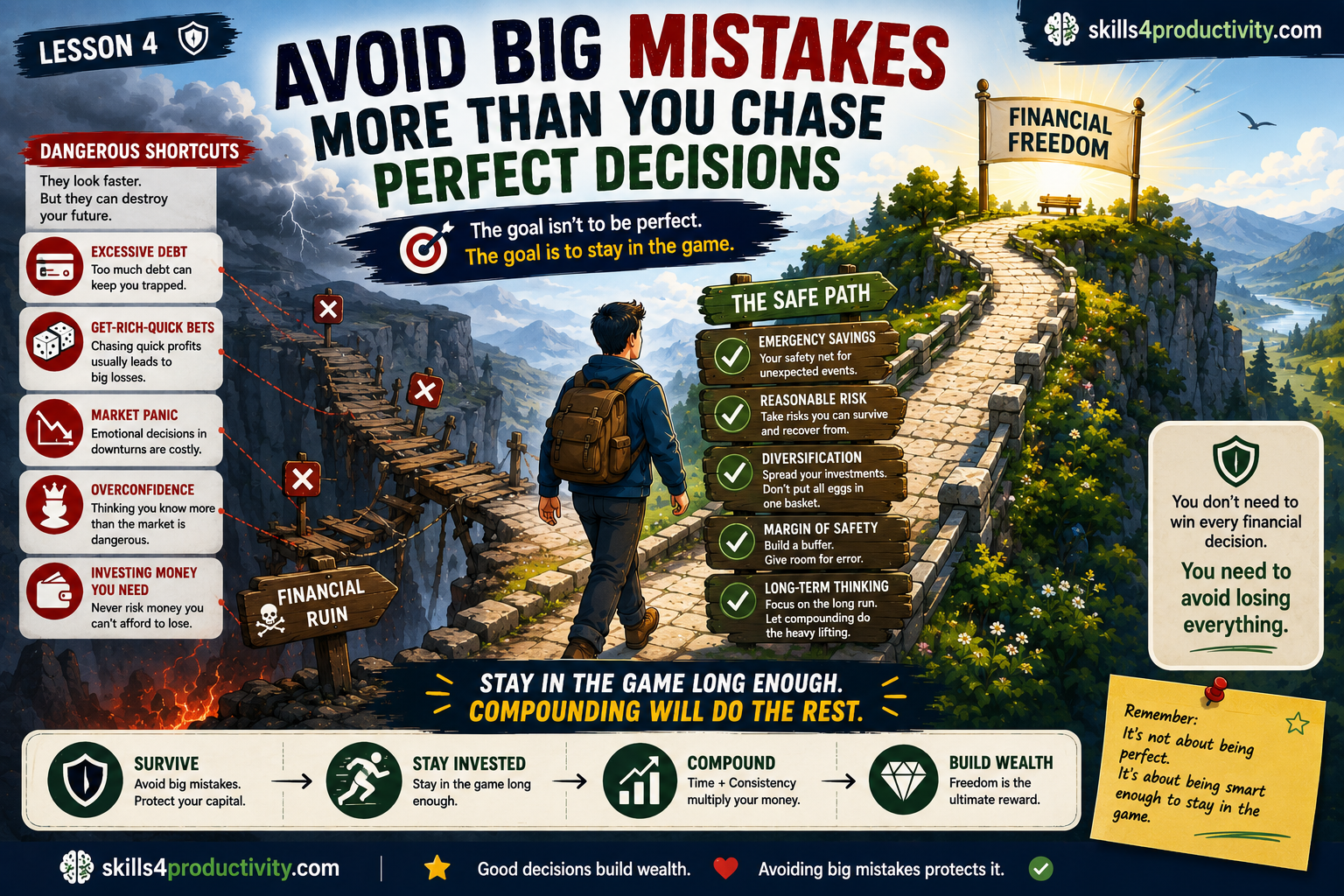
You don’t have to make perfect financial decisions to build wealth. According to Morgan Housel, it’s often more important to avoid decisions that can permanently damage your finances.
Taking excessive risks, using too much debt, chasing quick profits, or investing money you can’t afford to lose can wipe out years of progress. A good financial strategy leaves room for mistakes and unexpected events.
The goal isn’t to maximize every opportunity. It’s to stay in the game long enough for compounding to work.
💡 Key Takeaway
Protect your downside first. Staying financially healthy gives your money time to grow.
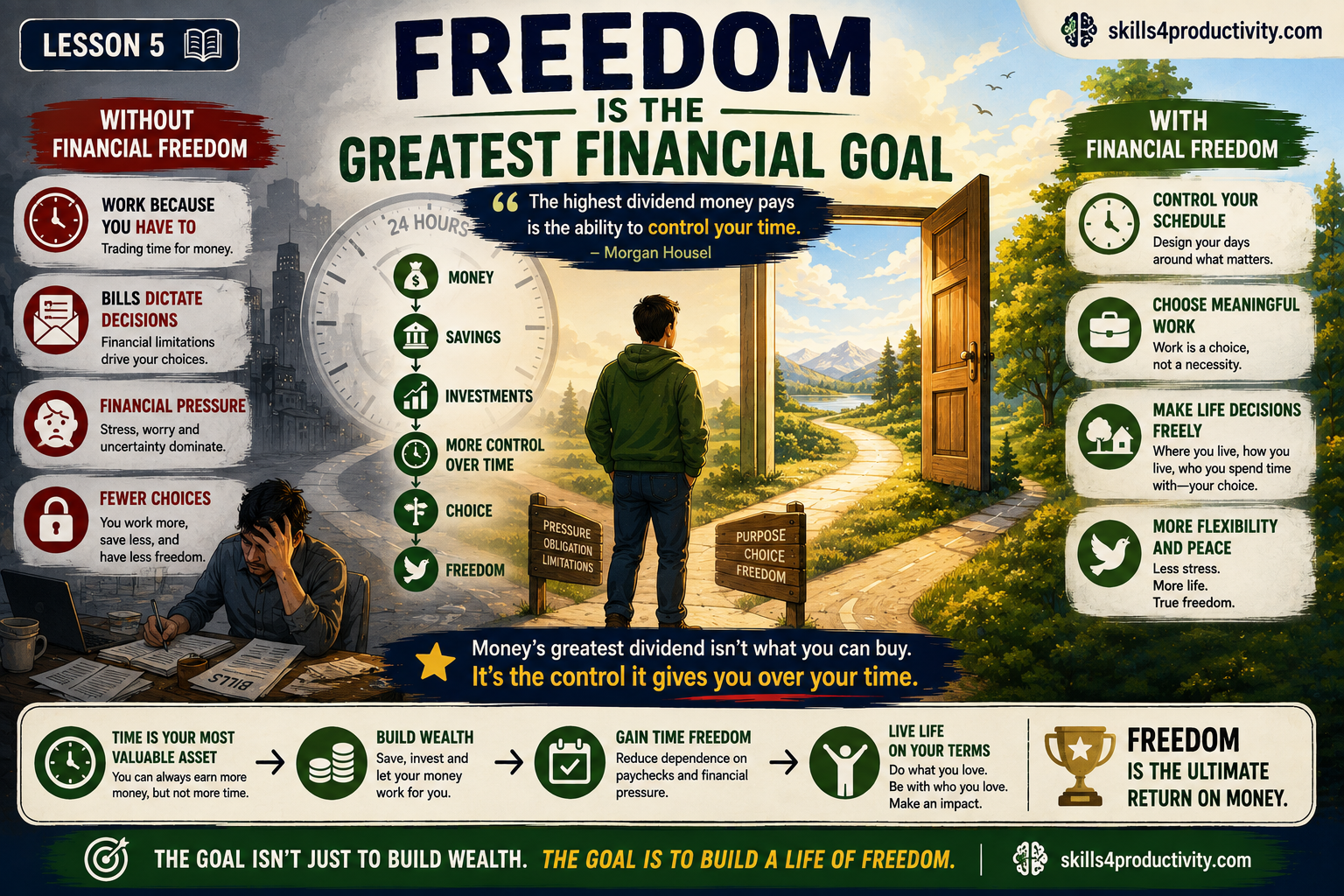
5. Freedom Is the Greatest Financial Goal
Money isn’t valuable simply because it lets you buy more things. One of its greatest benefits is the ability to control your time.
Morgan Housel argues that financial independence gives you more control over how you spend your days—what work you do, where you live, and how much pressure you accept. You don’t necessarily need to become extremely wealthy. Having enough money to make choices without being forced by financial pressure can be incredibly valuable.
The highest dividend money pays is the ability to control your time.
💡 Key Takeaway
The ultimate purpose of wealth isn’t status or luxury—it’s having the freedom to live life on your own terms.
6. Know When You Have Enough
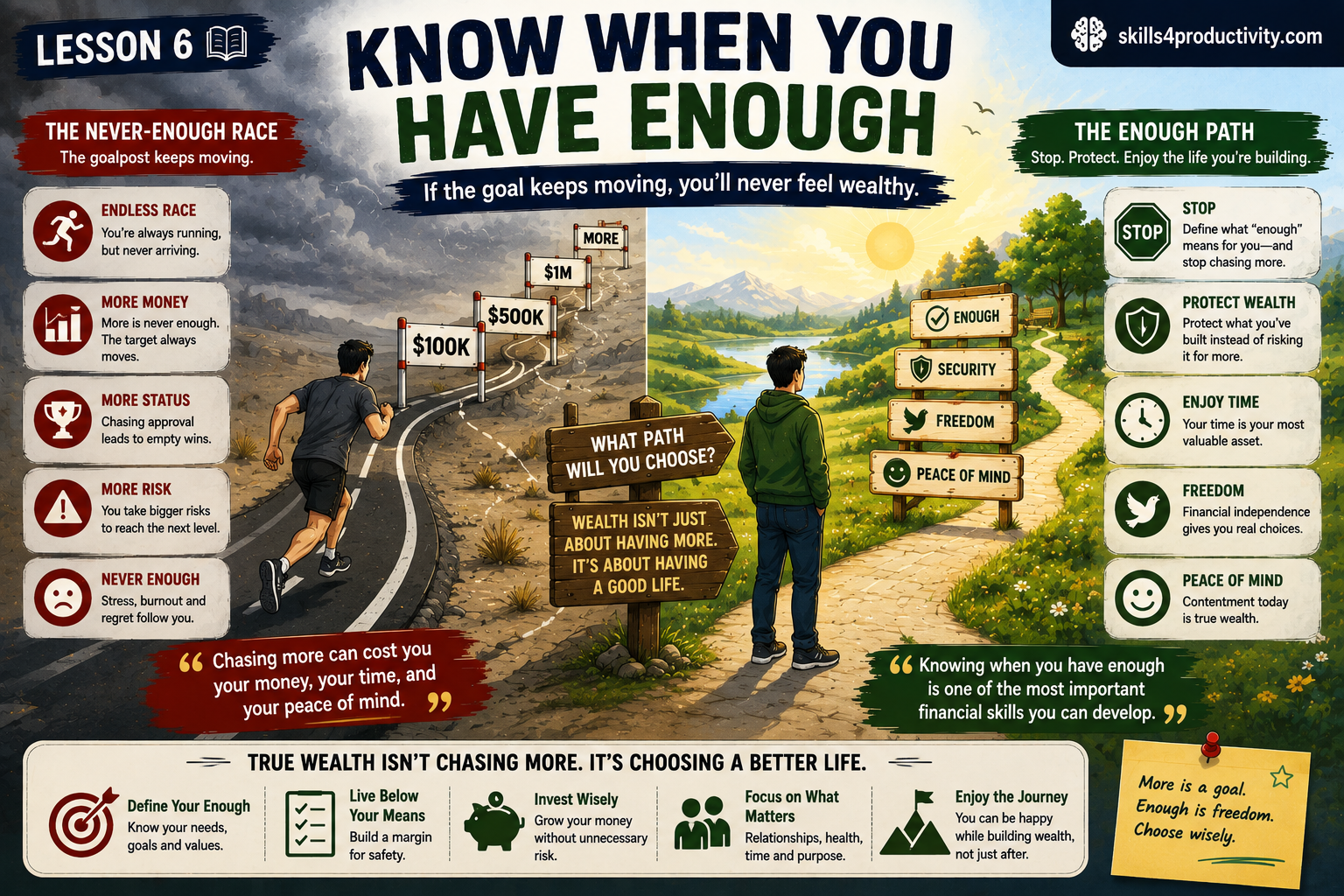
One of the biggest financial risks is never feeling satisfied. When you constantly move the goalpost—more money, a bigger house, a better car, a higher status—you can end up taking unnecessary risks just to get a little more.
Morgan Housel argues that knowing what is “enough” is a powerful financial skill. Once your needs and goals are covered, protecting what you’ve built can be more valuable than endlessly chasing more.
Knowing when you have enough can protect you from risks you don’t need to take.
💡 Key Takeaway
Define what “enough” means for you—and don’t risk your financial freedom just to have more.
7. Luck and Risk Are Always Part of the Story
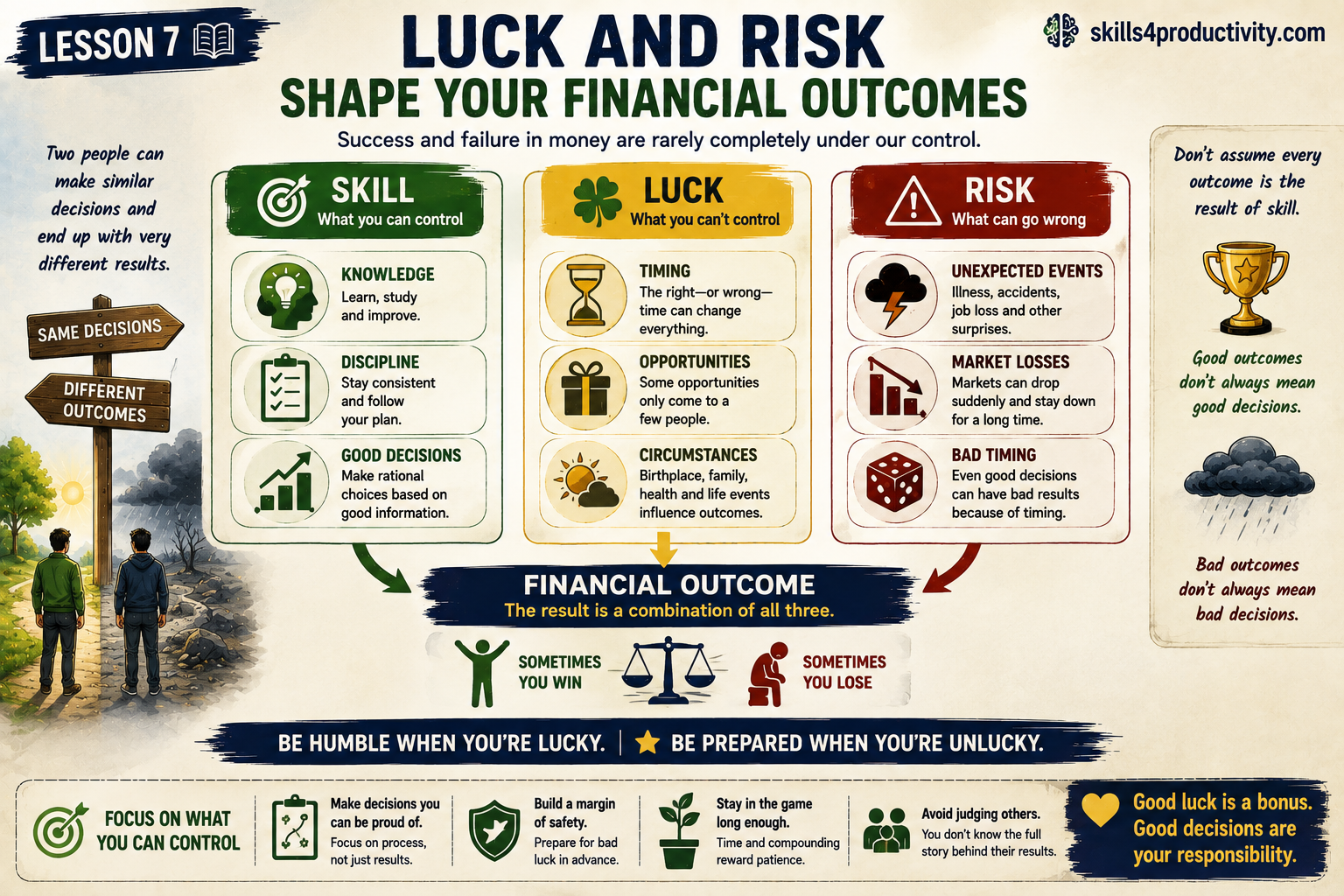
Success and failure in money are rarely completely under our control. Two people can make similar decisions and end up with very different results because of luck, timing, circumstances, or unexpected events.
Morgan Housel encourages readers to stay humble when things go well and cautious when judging other people’s failures. Instead of assuming that every outcome was caused by skill, focus on making decisions that can survive both good luck and bad luck.
💡 Key Takeaway
Good outcomes don’t always mean good decisions—and bad outcomes don’t always mean bad decisions.
8. Saving Gives You Options
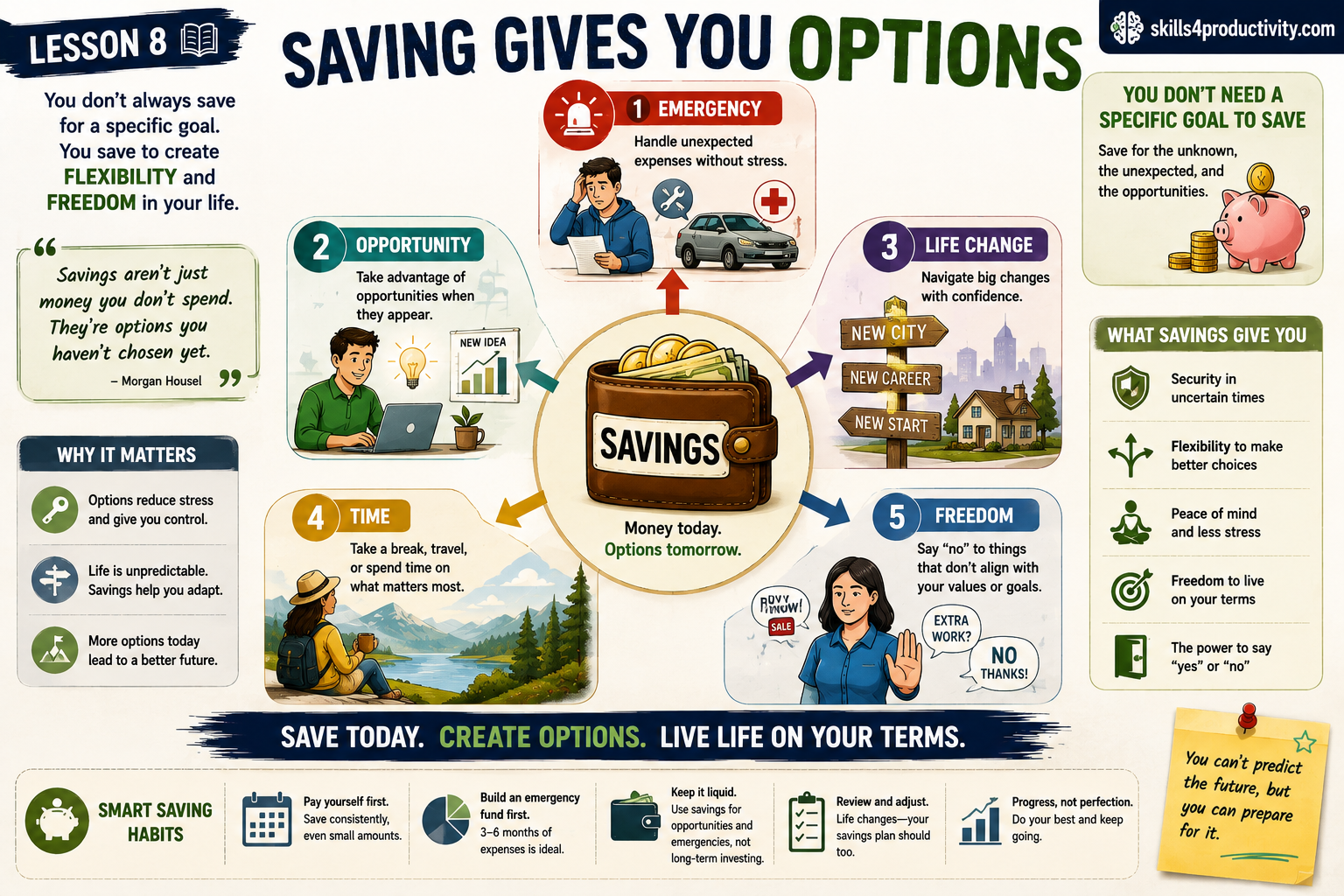
Saving money isn’t only about reaching a specific target like buying a house or taking a vacation. Morgan Housel argues that savings give you flexibility.
When you have money set aside, you can handle unexpected expenses, take advantage of opportunities, change direction, or simply say no to situations you don’t want. You don’t always need to know exactly what you’ll use your savings for.
Savings are valuable because they give you options when life changes.
💡 Key Takeaway
Don’t save only for a specific purchase. Save to create freedom and flexibility.
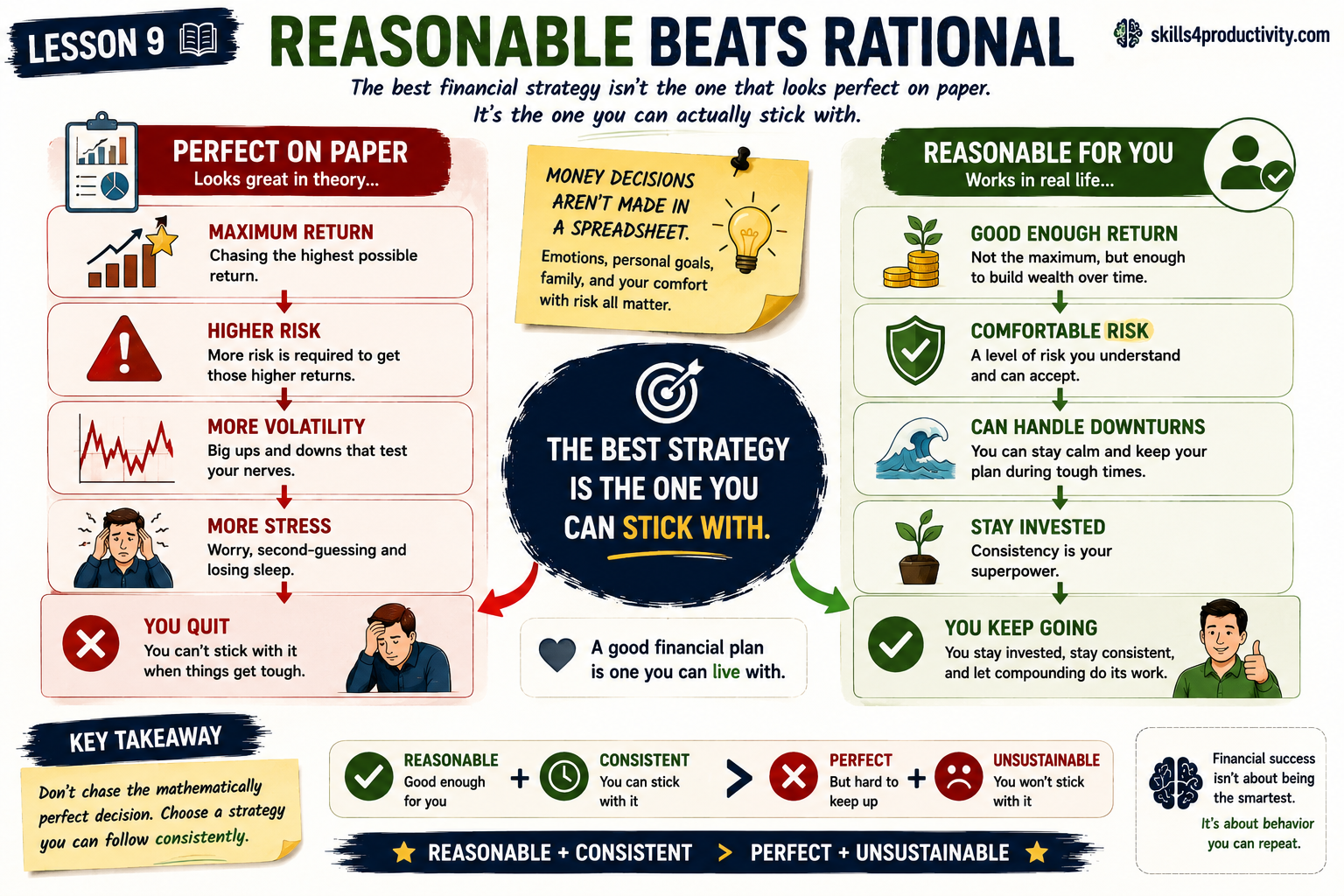
9. Being Reasonable Is Often Better Than Being Perfectly Rational
Money decisions aren’t made in a spreadsheet. Your emotions, personal goals, family situation, and comfort with risk all matter.
Morgan Housel argues that the best financial strategy isn’t always the one that looks perfect mathematically. It’s the one you can actually stick with. A slightly less optimal strategy that lets you sleep well and stay invested can be better than a theoretically perfect strategy you eventually abandon.
A good financial plan is one you can live with.
💡 Key Takeaway
Don’t chase the mathematically perfect decision. Choose a strategy you can follow consistently.
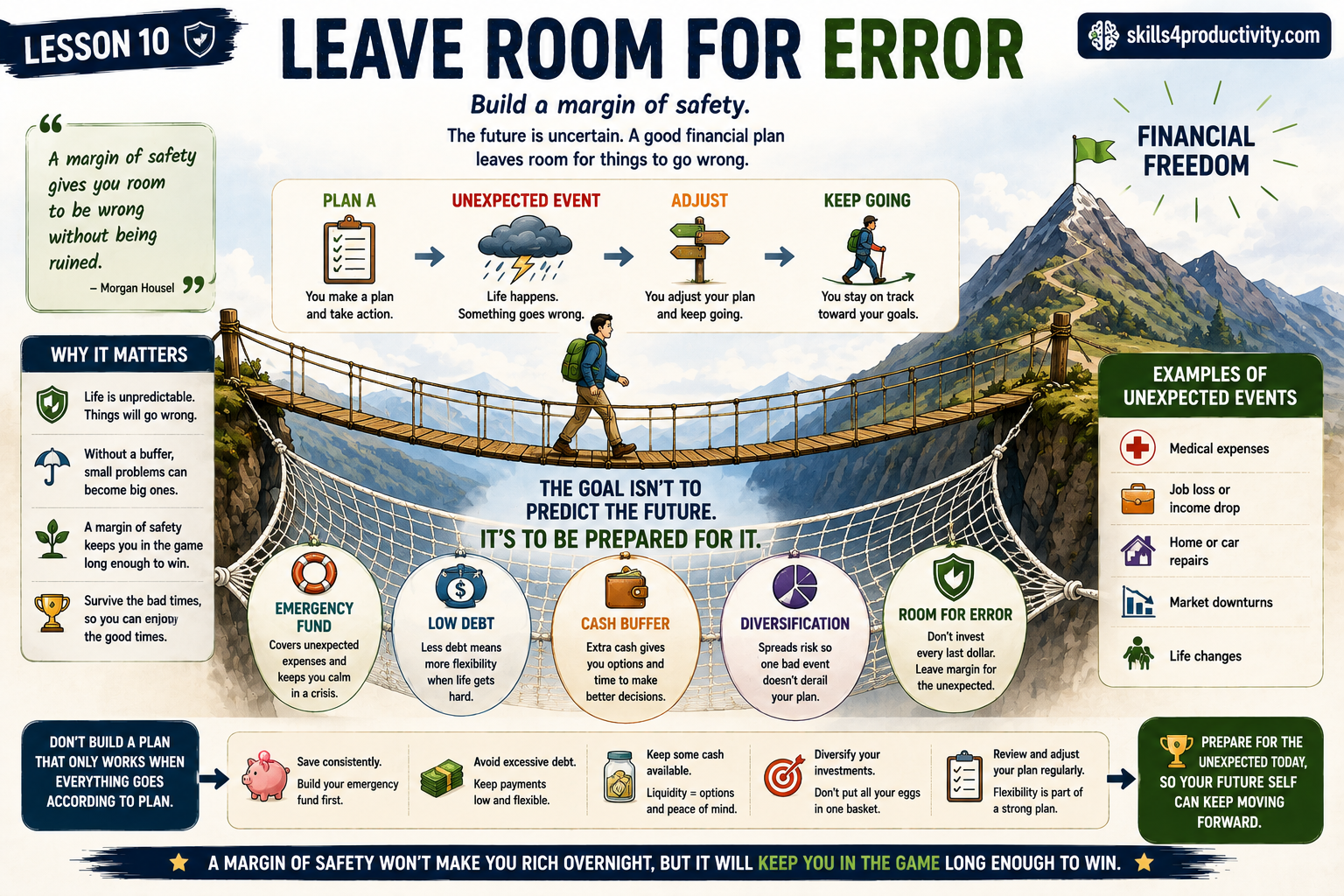
10. Build a Margin of Safety
The future is unpredictable. Markets fall, expenses appear unexpectedly, and plans change. Morgan Housel argues that a strong financial plan should leave room for things to go wrong.
Having an emergency fund, avoiding excessive debt, keeping some cash available, and not investing every last dollar can make it easier to survive unexpected events without abandoning your long-term plan.
A margin of safety gives you room to be wrong without being ruined.
💡 Key Takeaway
Don’t build a financial plan that only works when everything goes according to plan.
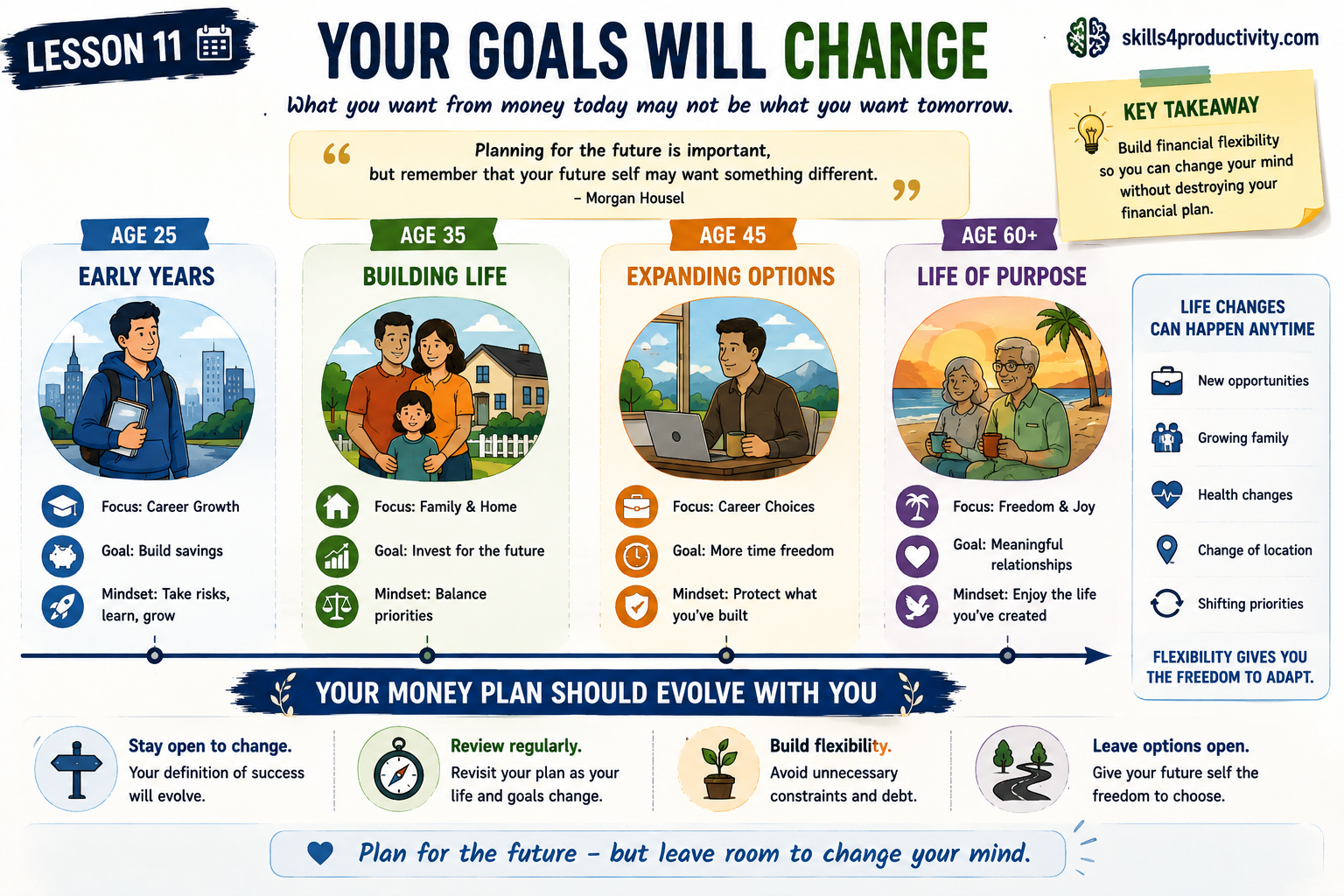
11. Your Financial Goals Will Change
What you want from money today may not be what you want in the future. Your career, family, priorities, lifestyle, and definition of success can all change over time.
Morgan Housel suggests leaving yourself enough flexibility to adapt. A financial plan shouldn’t lock you into a life you no longer want—it should give you room to change direction.
Planning for the future is important, but remember that your future self may want something different.
💡 Key Takeaway
Build financial flexibility so you can change your mind without destroying your financial plan.
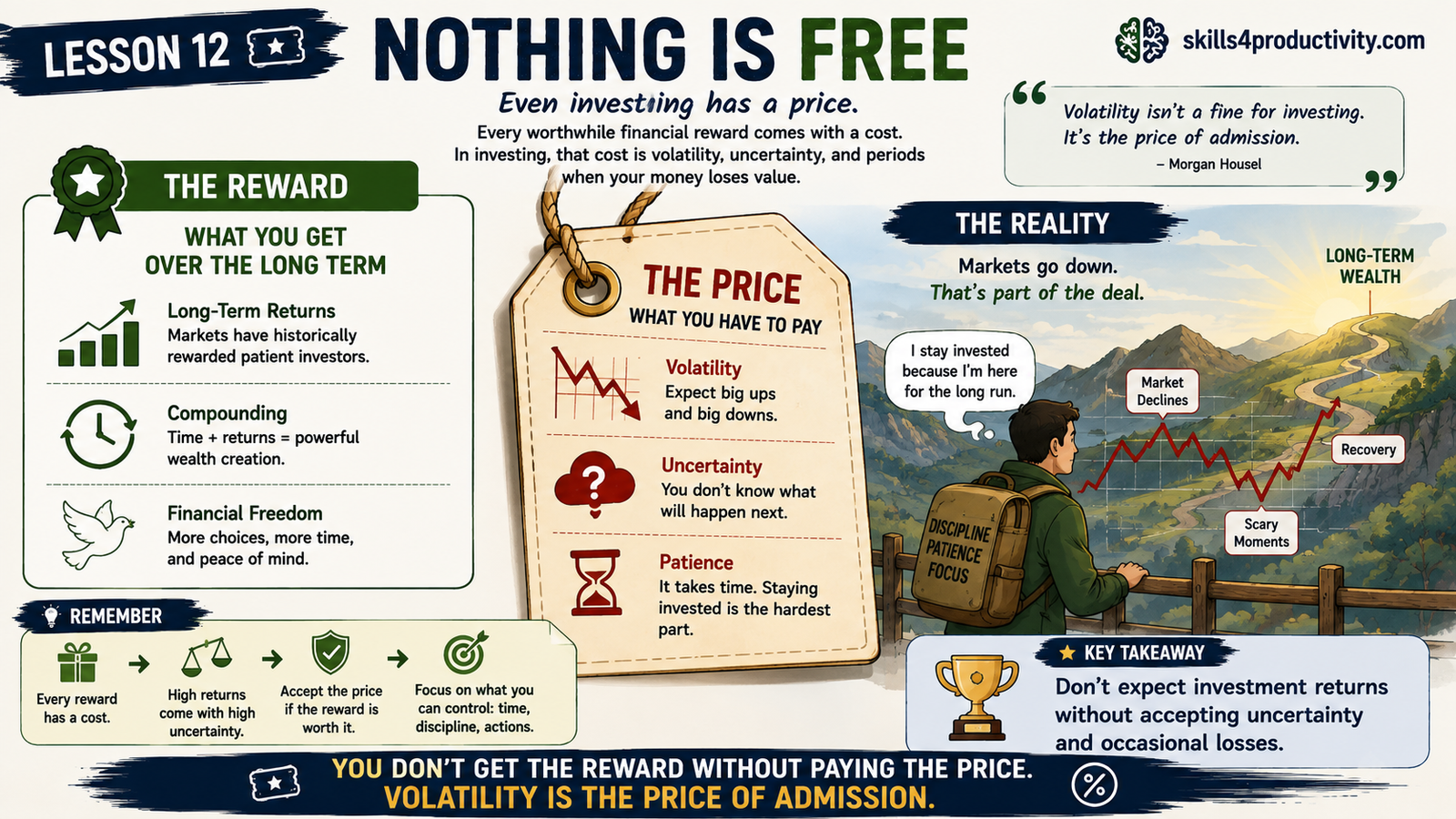
12. Nothing Is Free — Even Investing Has a Price
Every worthwhile financial reward comes with a cost. In investing, that cost is often volatility, uncertainty, and periods when your money loses value.
Morgan Housel argues that market declines shouldn’t automatically be treated as mistakes. They are part of the price investors pay for earning long-term returns.
Volatility isn’t a fine for investing. It’s the price of admission.
💡 Key Takeaway
Don’t expect investment returns without accepting uncertainty and occasional losses.
13. Your Financial Strategy Is Personal
People make money decisions based on different goals, timelines, incomes, responsibilities, and risk tolerance. What makes sense for one person may be completely wrong for another.
Morgan Housel warns against blindly copying investors, friends, influencers, or market trends. You may be playing a completely different financial game.
Don’t take financial risks just because someone else is comfortable taking them.
💡 Key Takeaway
Build your financial strategy around your own goals, timeline, and circumstances—not someone else’s.

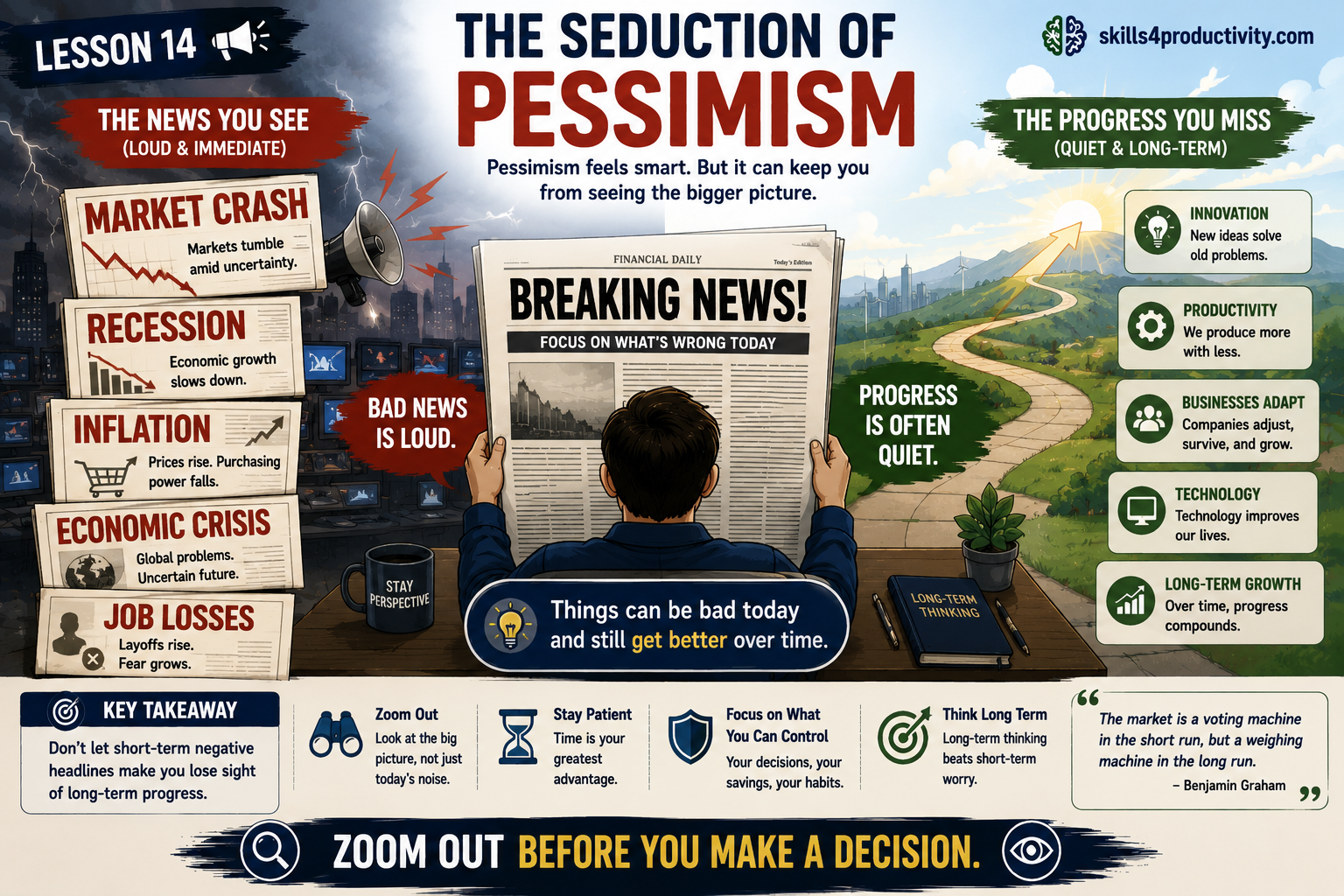
14. Pessimism Sounds Smarter Than Optimism
Bad financial news often gets more attention than good news. Market crashes, recessions, inflation, and economic problems are dramatic—and easy to notice.
Morgan Housel explains that pessimism can feel intelligent because it focuses on immediate problems, while progress is usually slower and less exciting.
Things can be bad today and still get better over time.
💡 Key Takeaway
Don’t let short-term negative headlines make you lose sight of long-term progress.
15. Be Careful of the Stories You Believe
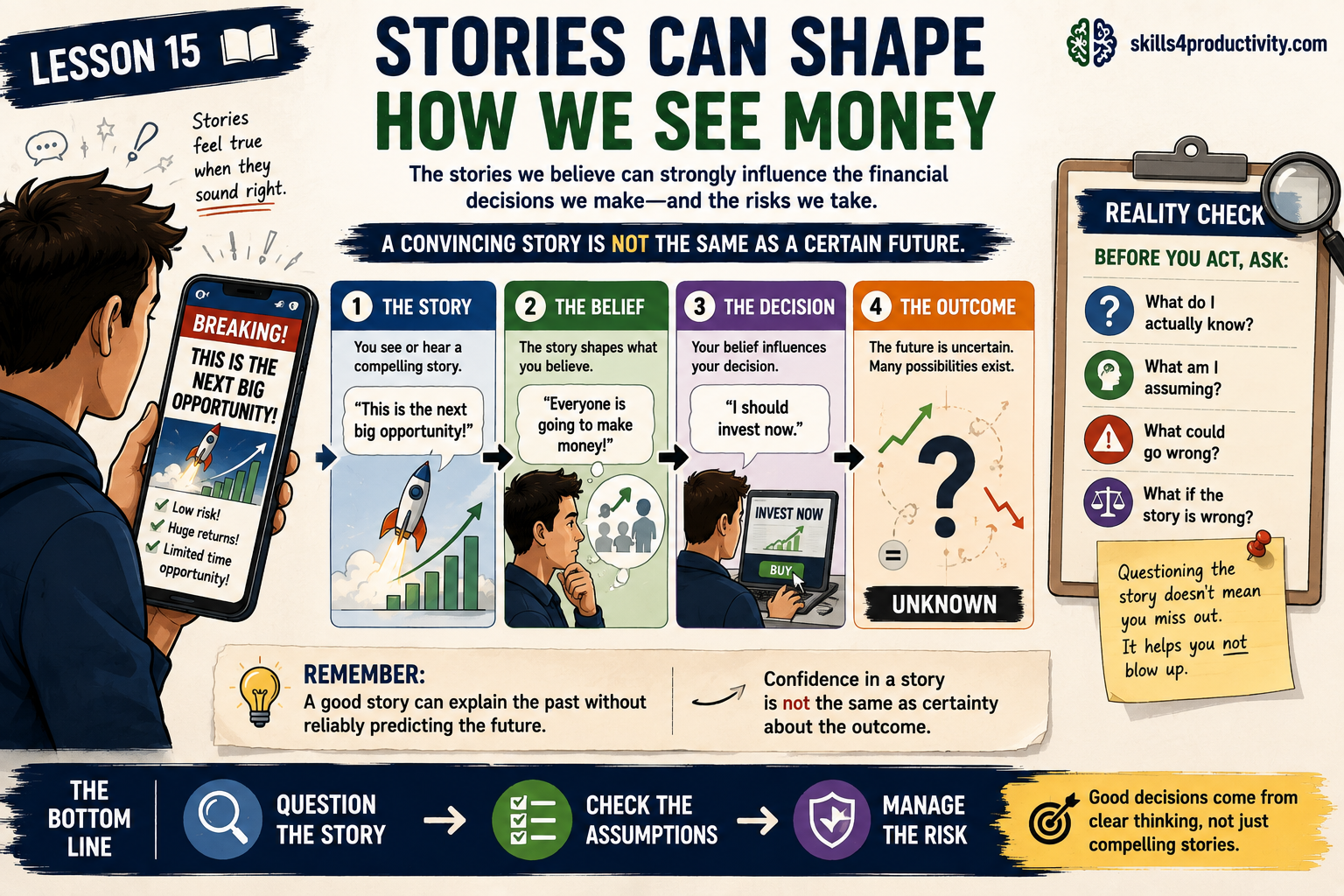
We often make financial decisions based on stories about how the world works. A convincing story can make an investment, trend, or prediction feel certain—even when the future is impossible to know.
Morgan Housel reminds us that confidence in a story isn’t the same as certainty about the outcome. The more emotional or convincing the story, the more important it is to question our assumptions.
A good story can explain the past without reliably predicting the future.
💡 Key Takeaway
Don’t confuse a convincing financial story with a guaranteed financial outcome.
16. Getting Wealthy and Staying Wealthy Are Different Skills
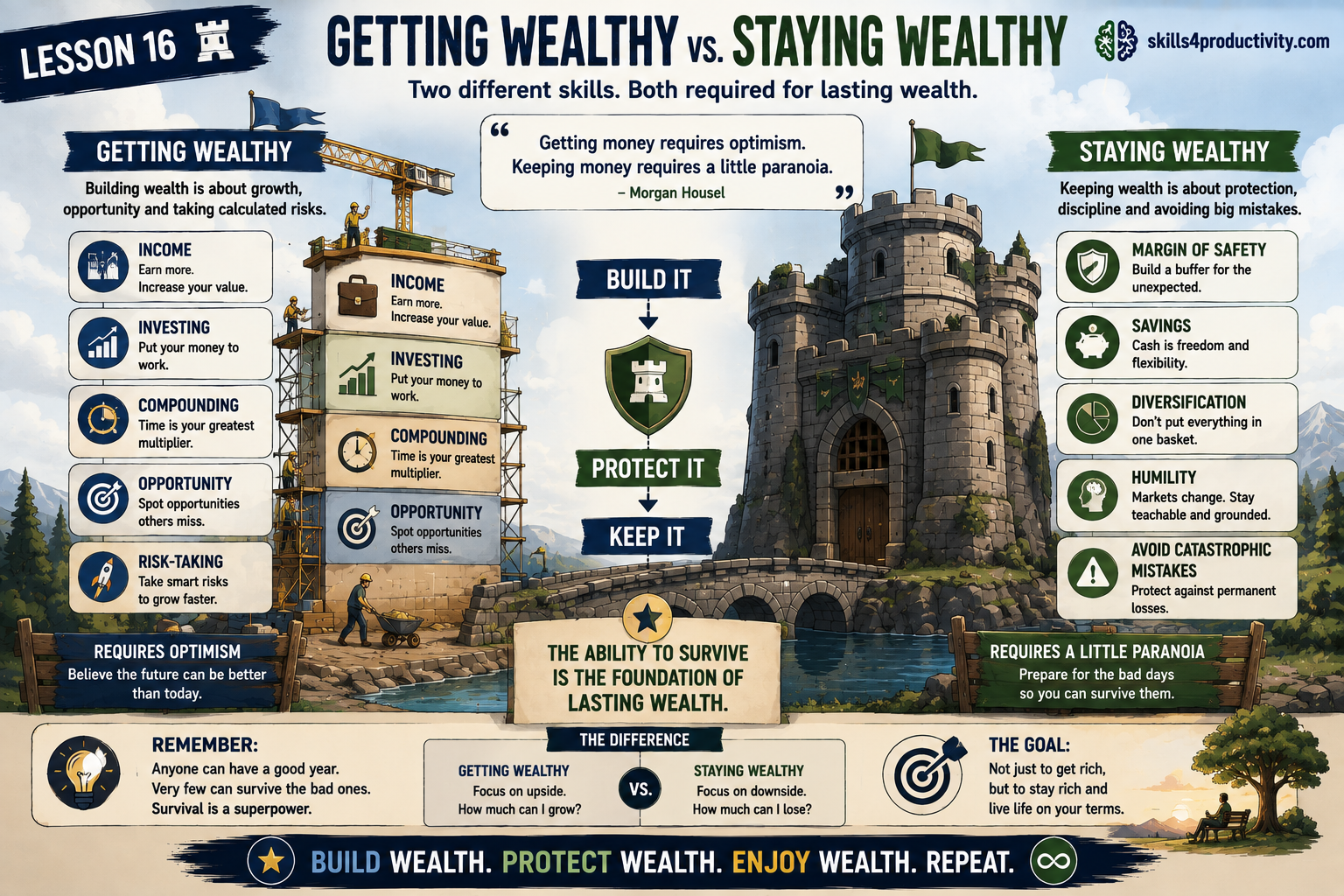
Building wealth requires taking some risks and making good decisions. Keeping wealth requires something different: humility, discipline, and the ability to survive bad times.
Morgan Housel explains that financial success isn’t only about earning high returns. It’s also about avoiding mistakes that can wipe out years of progress.
Getting money requires optimism. Keeping money requires a little paranoia.
💡 Key Takeaway
Building wealth is one challenge. Protecting it is another.
17. The Real Value of Money Is Freedom
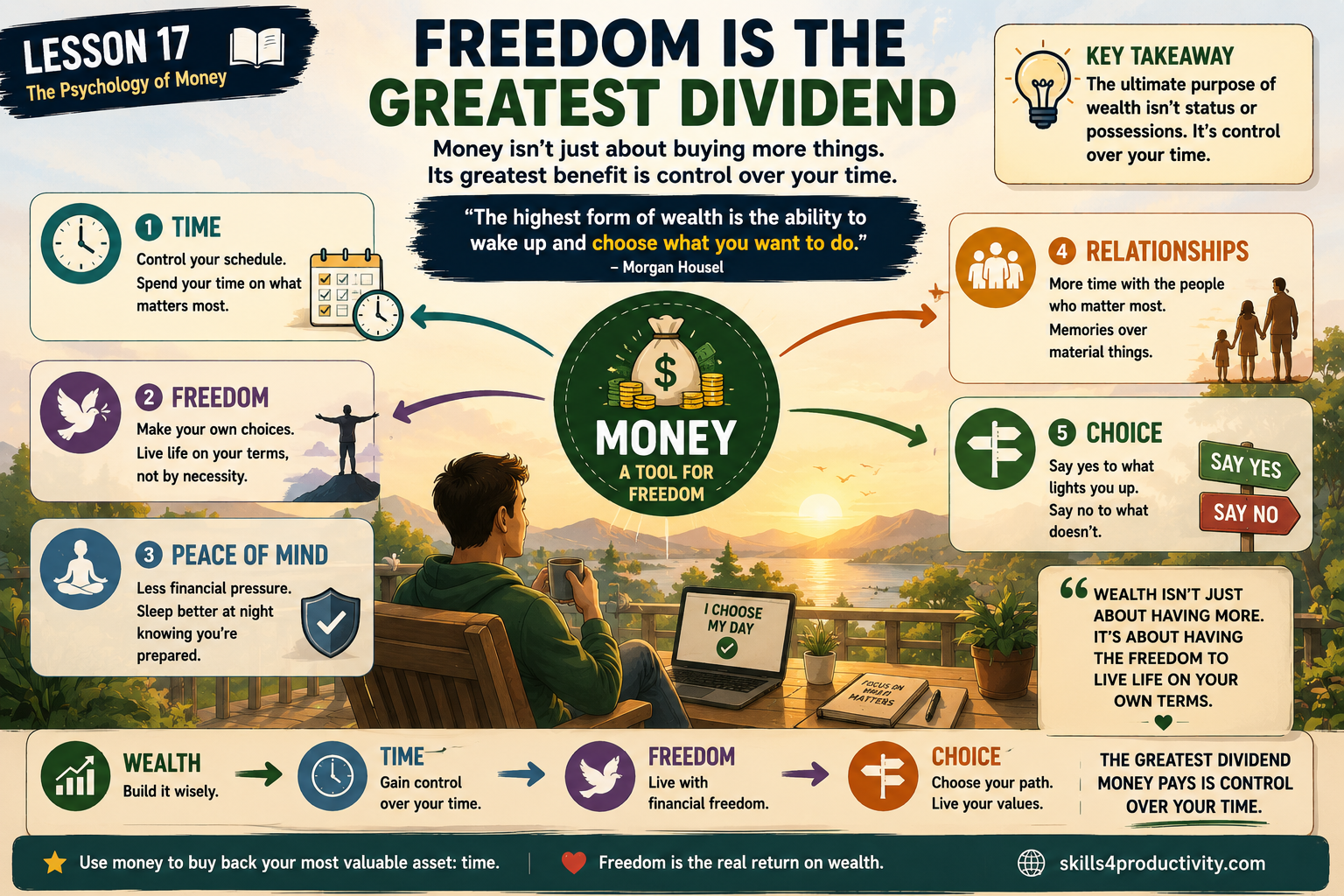
Money isn’t only about buying more things. One of its greatest benefits is control over your time.
Morgan Housel argues that financial independence gives you the ability to decide what to do, when to do it, and who to spend your time with—without being forced by financial pressure.
The highest form of wealth is the ability to wake up and choose what you want to do.
💡 Key Takeaway
The ultimate purpose of wealth isn’t status or possessions. It’s control over your time.
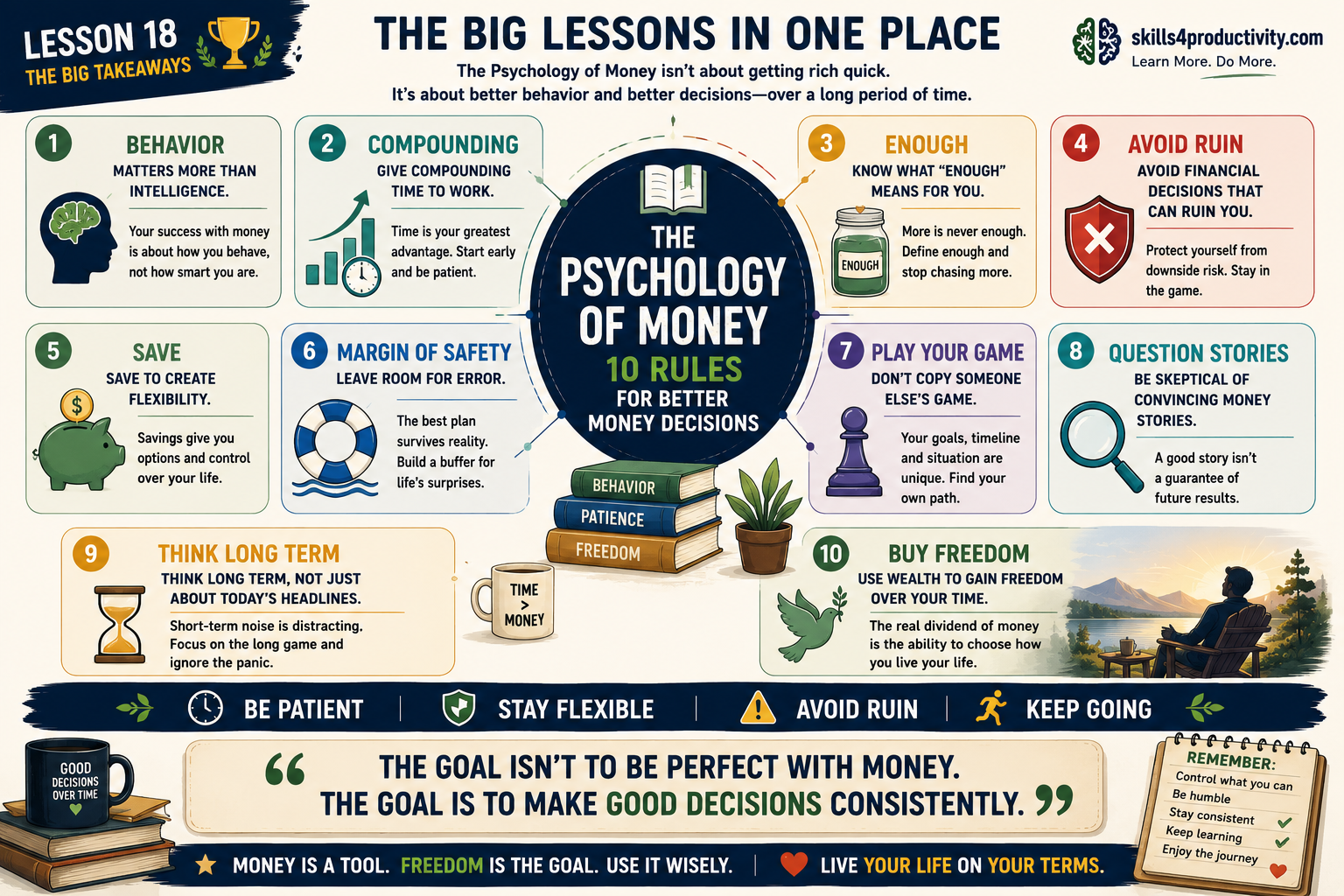
18. The Big Lessons in One Place
The Psychology of Money isn’t really a book about becoming rich quickly. It’s about developing better behavior around money—being patient, avoiding catastrophic mistakes, saving consistently, and understanding that everyone’s financial journey is different.
10 Rules to Remember
- Behavior matters more than intelligence.
- Give compounding time to work.
- Know what “enough” means for you.
- Avoid financial decisions that can ruin you.
- Save to create flexibility.
- Leave room for error.
- Don’t copy someone else’s financial game.
- Be skeptical of convincing money stories.
- Think long term, not just about today’s headlines.
- Use wealth to gain freedom over your time.
💡 Final Takeaway
Financial success is less about knowing what to do and more about behaving well for a very long time.
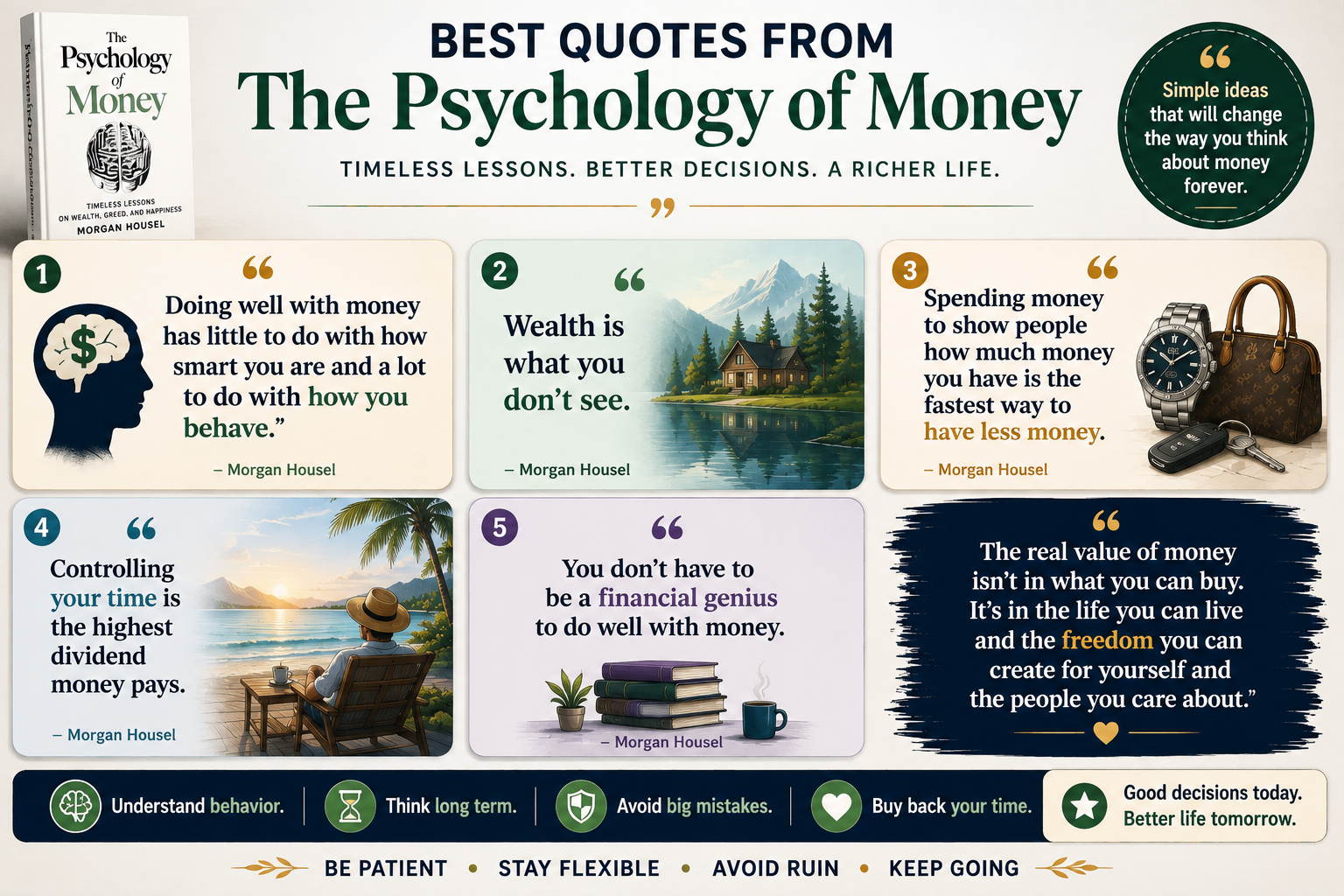
Best Quotes from The Psychology of Money
“Doing well with money has little to do with how smart you are and a lot to do with how you behave.”
“Wealth is what you don’t see.”
“Controlling your time is the highest dividend money pays.”
Who Should Read The Psychology of Money?
This book is ideal for:
- 💰 Anyone who wants better money habits
- 📈 Beginner and long-term investors
- 🧠 Readers interested in the psychology of financial decisions
- ⏳ Anyone who wants to think more long term about money
- 🕊️ People who want to use money to create more freedom
Best for: Anyone who wants to understand how to think about money—not just how to manage it.
📚 Get the Book
Enjoyed this summary? The Psychology of Money is worth reading if you want to dive deeper into Morgan Housel’s ideas about money, investing, wealth, behavior, and financial freedom.
Related Book Summaries
If you enjoyed The Psychology of Money, you may also like:
• Atomic Habits — Build better habits through small, consistent changes.
• The 7 Habits of Highly Effective People — Improve effectiveness, discipline, and personal growth.
• Deep Work — Develop focus and do more meaningful work.
• The One Thing — Focus on what matters most and eliminate distractions.
Disclosure: This article may contain affiliate links. If you purchase through these links, Skills4Productivity may earn a commission at no additional cost to you.