
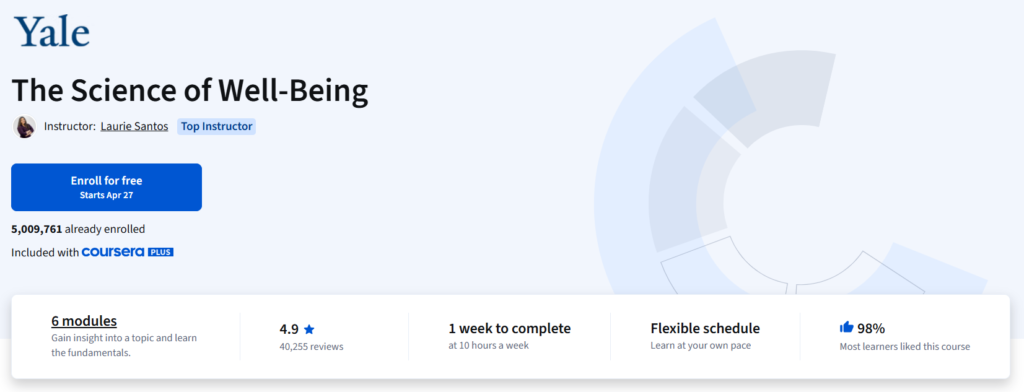
Happiness is something most people chase, but few of us are ever taught how it actually works.
That’s what makes The Science of Well-Being such a remarkable course.
Created by Yale professor Laurie Santos, this popular course explores the psychology of happiness and challenges many assumptions people have about what leads to a fulfilling life. Instead of offering vague advice to “be positive,” it focuses on research-backed ideas and practical habits that can genuinely improve well-being.
I’ve taken or explored many productivity and self-improvement courses, but The Science of Well-Being feels different. It doesn’t promise quick happiness hacks. Instead, it gently challenges some assumptions most of us carry about success, habits, and what actually makes life feel meaningful.
What I liked most is that it combines research with practical experiments, so it doesn’t stay theoretical.
If you’re interested in building better habits, reducing stress, and living more intentionally, this course is worth exploring.
The Science of Well-Being Highlights
- Level: Beginner
- Duration: ~1 week (at recommended pace)
- Modules: 6 modules
- Rating: 4.9
- Instructor: Laurie Santos
- Platform: Coursera
- Certificate: Shareable certificate
- Focus Areas: Happiness, habits, psychology, self-awareness
What You Will Learn
In this course, you’ll learn how to:
- Understand common misconceptions about happiness
- Identify habits that affect well-being
- Use evidence-based strategies to improve happiness
- Build healthier routines and behaviors
- Recognize cognitive biases that influence decisions
- Apply positive psychology principles in daily life
- Develop practices that support long-term well-being
The lessons are practical and surprisingly actionable.
Skills You Will Gain
- Positive Psychology
- Habit Formation
- Self-Awareness
- Decision Making
- Behavioral Change
- Mindfulness
- Well-Being Practices
- Personal Development
Many of these skills support both life satisfaction and productivity.
Course Curriculum
The course includes 6 modules, each building on the previous one.
Module 1: Introduction
Introduces the science behind happiness and how the course works.
Module 2: Common Myths About Happiness
Explores why many things we think make us happy often don’t.
Module 3: Why Our Expectations Are So Bad
Looks at how the mind often predicts happiness incorrectly.
Module 4: How Can We Overcome Our Biases
Practical strategies for challenging unhelpful thinking patterns.
Module 5: What Actually Supports Happiness
Focuses on evidence-based habits that support well-being.
Module 6: Putting Strategies into Practice
Helps translate ideas into sustainable personal habits.
The progression feels thoughtful and practical.
What Makes This Course Different
What makes this course stand out is that it feels less like a typical online course and more like a guided reset in how you think about well-being.
I liked that it doesn’t just explain research—it asks you to test ideas in your own life.
There are many self-help courses online, but this one feels grounded in research rather than motivation alone.
What makes it stand out is the combination of:
- Psychology-backed lessons
- Practical habit experiments
- Reflection exercises
- Real behavior-change strategies
It’s not simply about “feeling happier.”
It’s about understanding how to live better.
Why Take The Science of Well-Being Course
1. Happiness is often shaped by habits, not big milestones
That idea stayed with me.
2. Small experiments can change perspective
Some of the course exercises are simple, but surprisingly effective.
3. Productivity and well-being are more connected than we think
I liked how the course indirectly reinforces that.
Some ideas from this course tend to stay with you after the lessons end.
Who Should Take The Science of Well-Being Course
This course is ideal for:
- Anyone interested in personal growth
- People exploring positive psychology
- Professionals dealing with stress or burnout
- Students and lifelong learners
- People building better habits
- Anyone curious about what actually contributes to well-being
No prior psychology background is needed.
My Takeaways
Three things I especially liked:
1. It challenges common beliefs
Some of the biggest lessons come from questioning what we think leads to happiness.
2. It’s practical, not just theoretical
The habit-building exercises make the ideas stick.
3. It connects happiness with daily behavior
Small practices matter more than we often realize.
One Thing to Keep in Mind
Some lessons move slowly, and a few ideas may feel familiar if you’ve read positive psychology books before.
This isn’t a quick motivational course. It asks for reflection and application, which is part of its value.
If you’re looking for instant “life hacks,” this may feel slower paced—but if you enjoy thoughtful learning, that’s a strength.
I’d especially recommend it if you enjoy courses that stay with you after you finish them.
Certificate
After completing the course, learners receive a shareable certificate from Coursera, which can be added to:
- LinkedIn profile
- Resume
- Portfolio
Is It Worth Taking?
If you enjoy thoughtful, research-backed self-improvement content, I think it’s worth taking.
If you’re looking for quick motivation, it may feel slower—but that’s also part of what makes it valuable.
Explore the Course
If you want to learn what research says about happiness—and apply it in practical ways—this course is worth checking out.
Start Learning Now
Also Explore
- Learning How to Learn
- Atomic Habits Summary
- Deep Work Summary
- Positive Psychology: The Science of Happiness
Disclosure: This article may contain affiliate links. If you purchase through these links, Skills4Productivity may earn a commission at no additional cost to you.