
What makes one piece of content get shared thousands of times while another—equally useful—goes unnoticed?
A few days ago, I came across two LinkedIn posts.
The first was beautifully designed, well-written, and packed with useful information. It had only a handful of reactions.
The second was much simpler. No fancy graphics. No polished design. Yet it had been shared hundreds of times.
That made me stop and think.
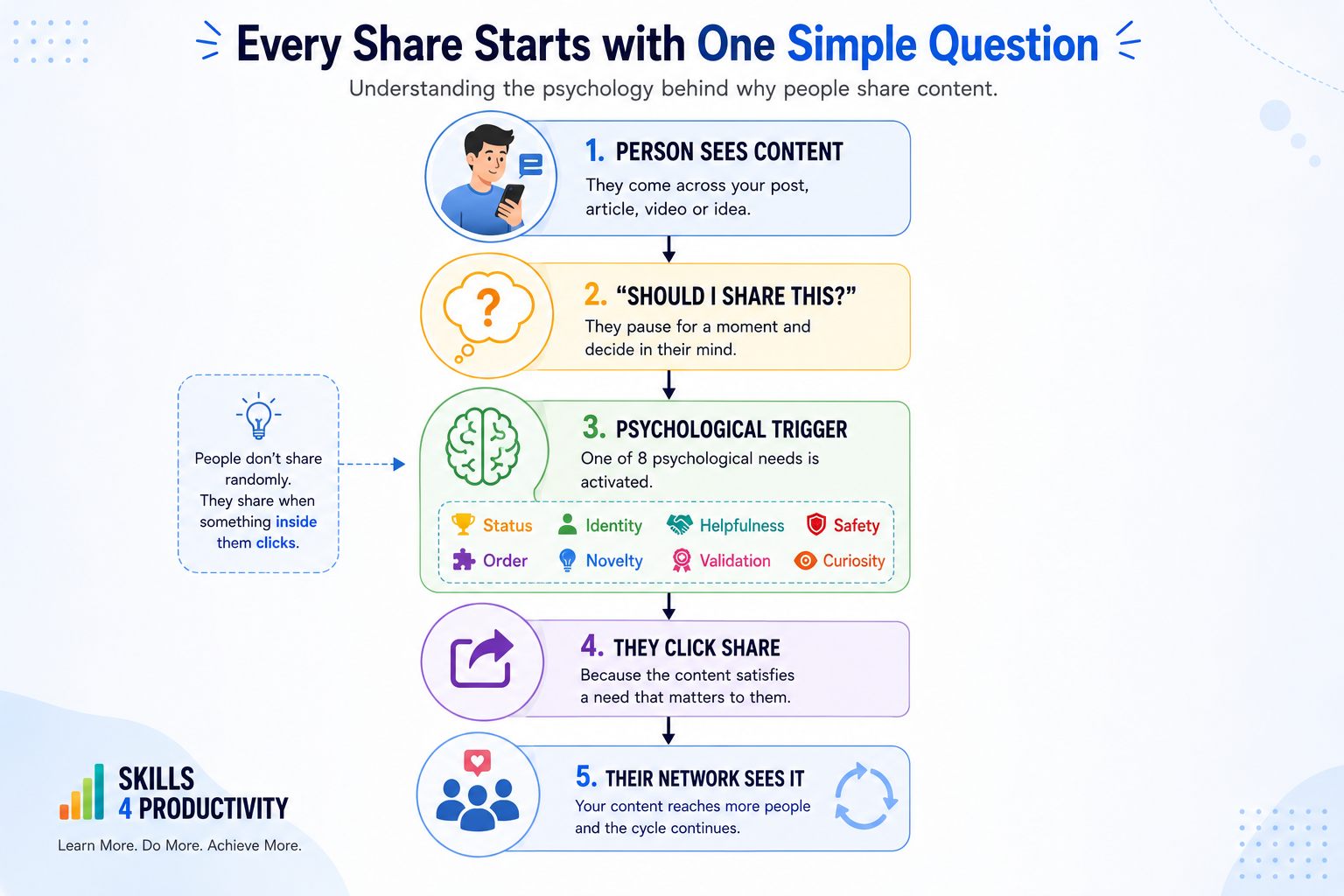
Why do people share some content but completely ignore other content?
Most of us believe that good content naturally gets shared. But after reading about the psychology behind sharing and reflecting on my own online behavior, I realized something surprising.
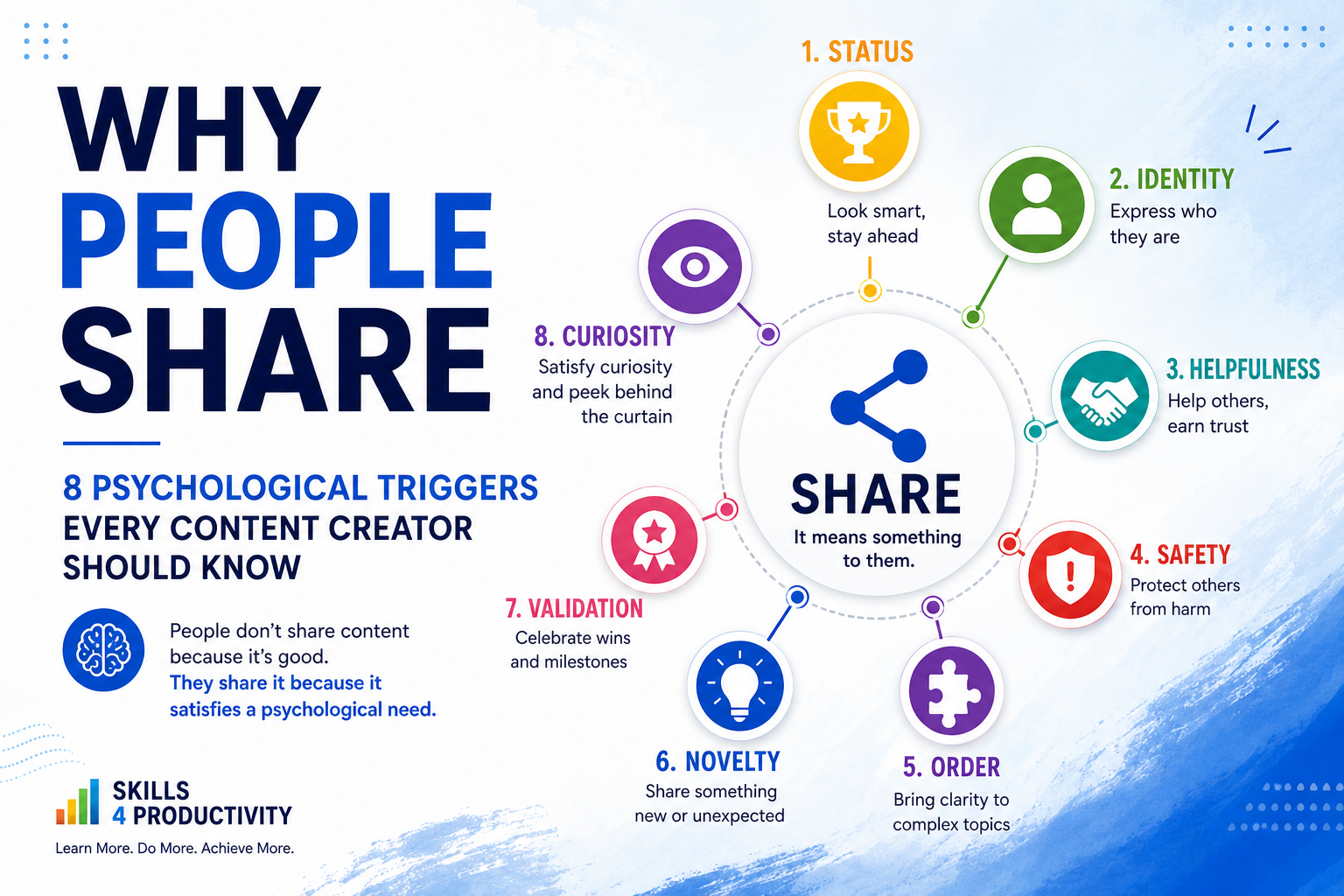
People don’t share content because it’s good.
They share it because sharing helps them satisfy a psychological need.
Once I understood that, I started looking at the posts I’d shared over the past year. Almost every one fit into one of a few predictable patterns.
Whether you’re a content creator, marketer, entrepreneur, educator, or simply someone who wants their ideas to reach more people, understanding these patterns can completely change the way you create content.
Let’s explore the eight psychological triggers that make people hit the Share button.
1. Status: Sharing Makes People Feel Knowledgeable
Have you ever shared a new AI tool before your colleagues discovered it?
Or posted about a book that changed the way you think?
You’re not just sharing information.
You’re also communicating:
“I’m someone who discovers useful things.”
People enjoy being the person who introduces a valuable idea first.
That’s why posts like these spread quickly:
- “10 AI tools you probably haven’t tried yet”
- “A hidden Excel shortcut that saves hours”
- “One marketing lesson I wish I’d learned sooner”
The content gives the person sharing it a sense of credibility.
Ask yourself before publishing:
Will someone feel smarter or more knowledgeable after sharing this?
2. Identity: We Share What Represents Who We Are
Think about the last article you reposted.
Chances are it reflected one of your values, interests, or beliefs.
People don’t just share information.
They share identity.
A designer shares creativity.
A developer shares clean code.
A teacher shares learning resources.
A fitness enthusiast shares health tips.
The content becomes a way of saying,
“This is what I believe in.”
When your content resonates with someone’s identity, they don’t need to explain why they’re sharing it.
The post does that for them.
3. Helpfulness: One of the Strongest Reasons People Share
If there’s one lesson every content creator should remember, it’s this: People love helping other people.
That’s why practical content consistently performs well.
Think about how often you’ve shared:
- A useful checklist
- A free template
- A productivity tip
- A discount
- A learning resource
- A tool that saved you time
You weren’t trying to go viral.
You simply thought,
“Someone in my network will find this useful.”
Helping others builds trust, and trust encourages sharing.
Before publishing your next post, ask yourself: Does this genuinely make someone’s life easier?
4. Safety: We Naturally Want to Protect Others
Human beings are wired to warn people about danger.
That’s why posts about scams, cybersecurity threats, financial fraud, or career mistakes often spread rapidly.
People don’t share these posts because they’re entertaining.
They share them because they hope someone else avoids making the same mistake.
If your content prevents costly errors or saves people from unnecessary problems, it already has a strong reason to be shared.
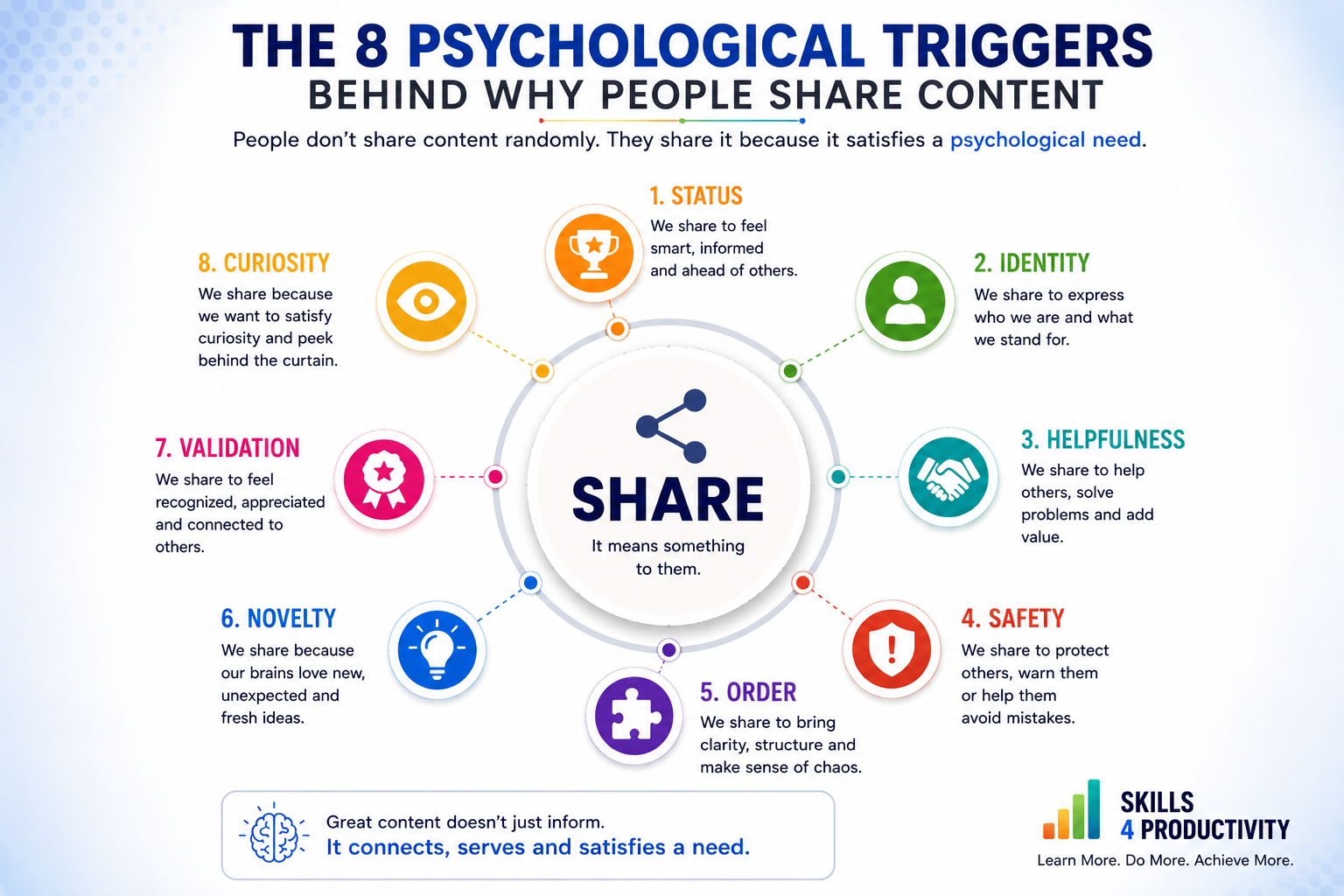
5. Order: People Share Content That Brings Clarity
The internet doesn’t suffer from a lack of information.
It suffers from a lack of clarity.
People appreciate creators who take complicated ideas and make them easy to understand.
That’s why frameworks, diagrams, decision trees, and step-by-step guides perform so well.
Think about the content you’ve saved recently.
There’s a good chance it wasn’t the longest article.
It was the one that made a confusing topic finally make sense.
Don’t just provide information.
Provide structure.
6. Novelty: Our Brains Notice What’s Unexpected
There’s a reason posts beginning with phrases like:
- “I never knew this…”
- “Today I learned…”
- “Most people get this wrong…”
often attract attention.
Our brains are naturally curious.
But novelty isn’t about saying something outrageous.
The best content introduces a fresh perspective while remaining familiar enough for people to understand.
If everything feels predictable, people scroll past.
If everything feels unbelievable, they stop trusting it.
The sweet spot lies somewhere in between.
7. Validation: People Enjoy Sharing Their Progress
Whether it’s completing a certification, reading a challenging book, finishing a marathon, or learning a new skill, people enjoy celebrating progress.
This isn’t always about seeking attention.
More often, it’s about recognizing personal growth.
Think about how frequently you see posts saying:
- “I just completed…”
- “Excited to share…”
- “Happy to announce…”
Achievements inspire conversations, encourage others, and often motivate people facing similar goals.
8. Curiosity: Behind-the-Scenes Always Wins
One of the easiest ways to capture attention is by showing people something they don’t normally get to see.
Behind-the-scenes content satisfies curiosity.
Examples include:
- How a product was built
- Lessons learned from failure
- A creator’s workflow
- Before-and-after transformations
- Experiments that didn’t go as planned
People enjoy seeing the process—not just the polished result.
Authenticity often creates more engagement than perfection.
The Biggest Lesson
The biggest takeaway is surprisingly simple: People don’t share content because it’s “good.“
They share it because it:
- makes them look knowledgeable,
- helps someone,
- reinforces their identity,
- simplifies something complex,
- sparks curiosity, or
- creates an emotional connection.
Before asking “Is this good content?”, ask: Why would someone want to share this?”
That single question can completely change how you create content.
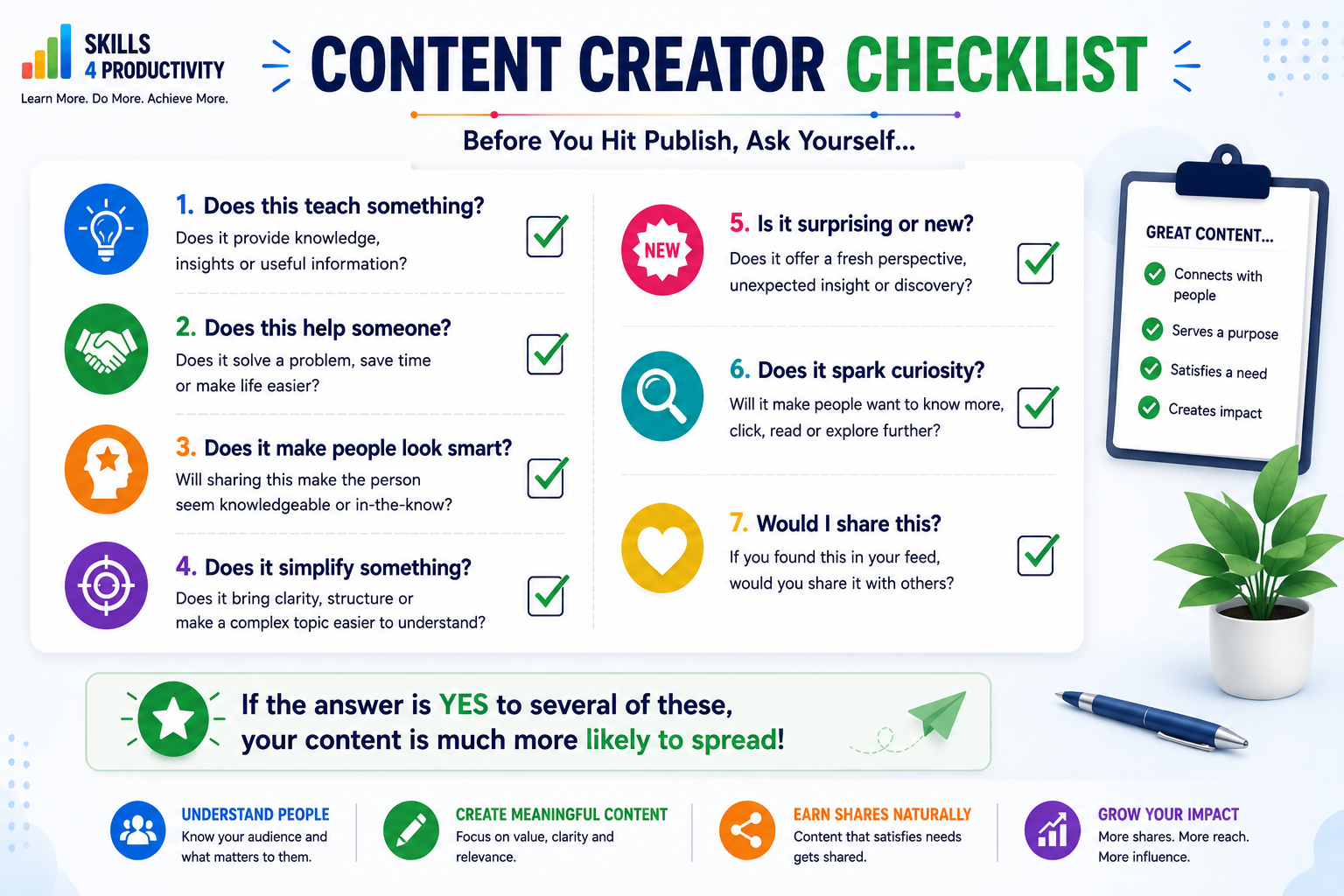
A Simple Checklist Before You Publish
Before hitting Publish, take 30 seconds to ask yourself:
✅ Will this make someone feel knowledgeable?
✅ Does it help people express who they are?
✅ Is it genuinely useful?
✅ Could it protect someone from making a mistake?
✅ Does it simplify a complex topic?
✅ Does it offer a fresh perspective?
✅ Does it celebrate progress or achievement?
✅ Does it satisfy curiosity?
The more of these questions you can answer with “yes,” the more likely your content is to be shared.
Final Thoughts
Every share is a decision.
Behind every decision is a human emotion.
The creators who consistently build engaged audiences don’t simply write better headlines or design better graphics.
They understand people.
When your content helps someone look knowledgeable, express their identity, solve a problem, learn something new, or help another person, sharing becomes a natural outcome—not something you have to ask for.
So the next time you’re creating a blog post, LinkedIn update, newsletter, or video, don’t just ask:
“Is this valuable?”
Ask a better question:
“What would make someone want to share this?”
That one question might change the way you create content forever.
Key Takeaways
- People don’t share content simply because it’s informative—they share it because it fulfills a psychological need.
- The eight most common sharing triggers are Status, Identity, Helpfulness, Safety, Order, Novelty, Validation, and Curiosity.
- Great content isn’t just consumed; it’s passed on because it says something about the person sharing it.
- Before publishing, think less about algorithms and more about human behavior.
- The best content creators understand that every share starts with one simple question: “Why would someone want to share this?”
What about you?
Think about the last article, video, or LinkedIn post you shared.
Which of these eight triggers made you click the “Share” button?