
You worked all day. Your calendar was packed. Your inbox is finally under control.
Yet when you stop and think about it, you haven’t made much progress on the things that truly matter.
If this sounds familiar, you’re not alone.
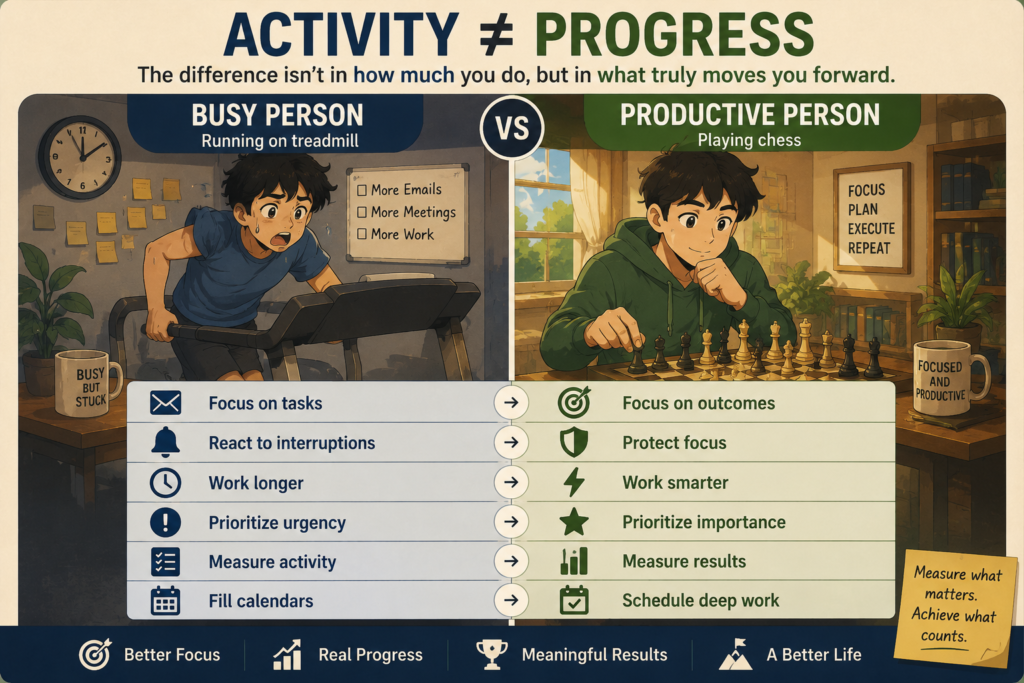
Many people mistake being busy for being productive. They spend their days responding to emails, attending meetings, checking notifications, and crossing small tasks off their to-do lists. These activities create the feeling of productivity, but they don’t always move important goals forward.
True productivity isn’t about doing more things. It’s about doing the right things consistently.
The difference may seem subtle, but it can dramatically impact your career, learning, business, and personal growth.
If you’re interested in building better productivity skills and frameworks, explore our Productivity Blog for practical guides and resources.
In this guide, we’ll explore seven common signs that you’re busy but not productive—and practical ways to break the cycle.
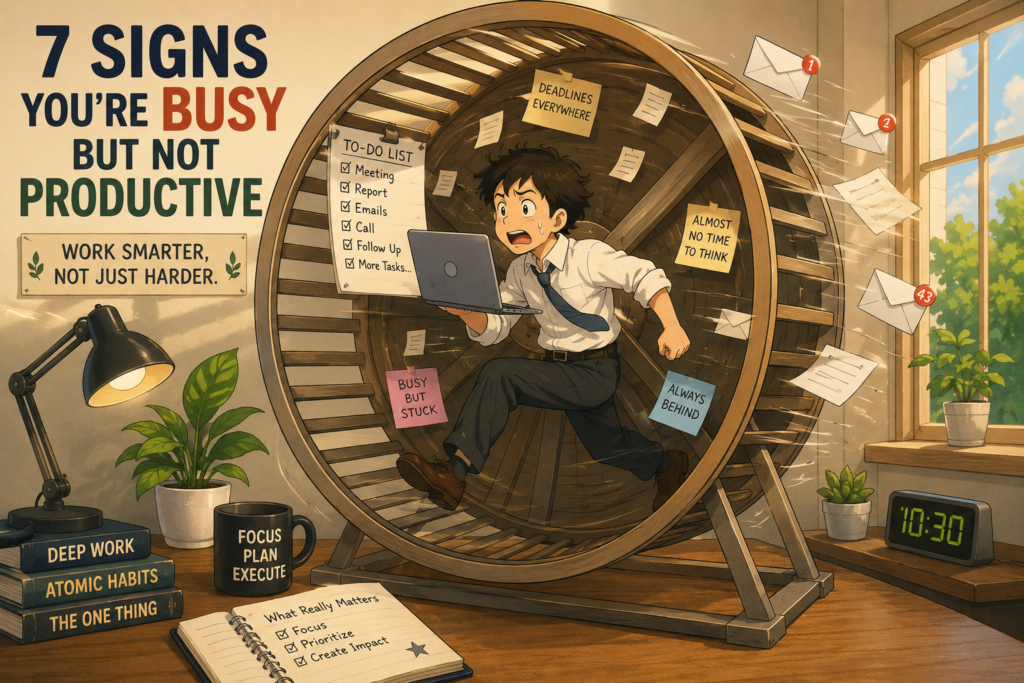
Quick Summary
Here are the 7 signs you’re busy but not productive:
✓ Your to-do list never gets smaller
✓ You spend more time planning than doing
✓ Notifications control your day
✓ You always do easy tasks first
✓ You rarely schedule deep work
✓ Everything feels urgent
✓ You measure activity instead of results
The solution is simple:
Focus on outcomes, prioritize deep work, and measure progress instead of activity.
Why Being Busy Feels Productive
Before diving into the signs, it’s important to understand why so many people fall into this trap.
Busy work provides immediate feedback.
You answer an email and feel accomplished.
You attend a meeting and feel involved.
You organize your task manager and feel prepared.
The problem is that many of these activities don’t create meaningful outcomes.
Productive work often feels slower and less exciting.
Writing an important report., Learning a new skill, Building a business, Creating content. Developing a long-term project.
These activities require focus, patience, and delayed gratification.
The challenge is learning to distinguish between activity and progress.
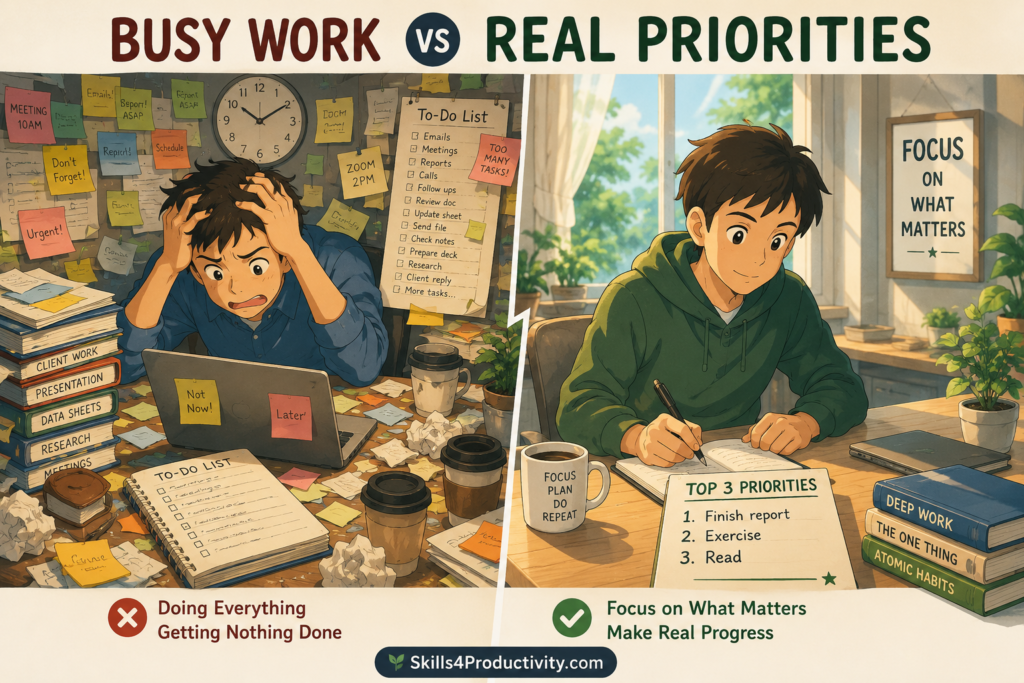
Sign #1: Your To-Do List Never Gets Smaller
One of the clearest signs you’re busy but not productive is a task list that keeps growing.
Every day, you add new items.
Every day, you complete a few.
Yet somehow the list becomes longer.
This usually happens because you’re treating every task as equally important.
Small administrative tasks compete for attention with meaningful work.
As a result, you spend your day reacting instead of prioritizing.
Why This Happens
Many people use to-do lists as storage systems rather than decision-making tools.
The list becomes a collection of everything that could be done instead of what should be done.
How to Fix It
Focus on outcomes instead of tasks.
Many productivity experts recommend identifying a small number of priorities rather than trying to do everything at once.
One of the biggest lessons from our The One Thing Summary is that extraordinary results come from focusing on fewer priorities.
Instead of creating a list of 20 items, identify your top three priorities for the day.
Ask yourself:
If I could only complete three things today, what would create the most value?
This simple question can transform how you work.
Sign #2: You Spend More Time Planning Than Doing
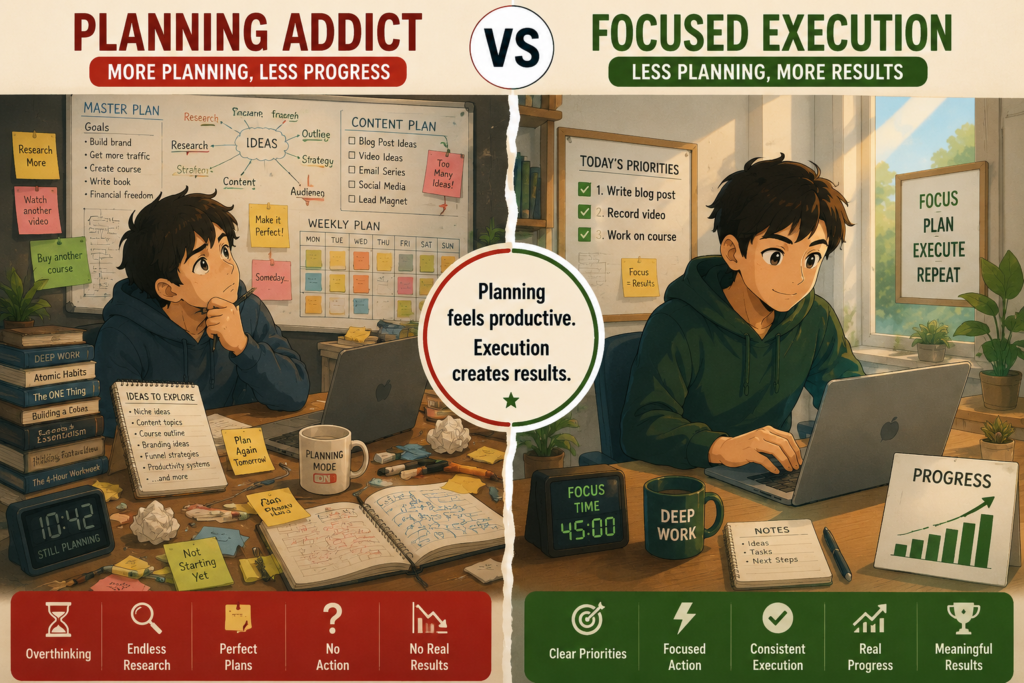
Planning is valuable.
Overplanning is procrastination wearing a productivity disguise.
Many productivity enthusiasts spend hours:
- Organizing their calendar
- Tweaking Notion dashboards
- Researching productivity systems
- Watching productivity videos
While these activities feel useful, they can become a substitute for execution.
The Productivity Planning Trap
Planning gives you the satisfaction of progress without requiring the discomfort of action.
It’s safer to improve your system than to tackle difficult work.
How to Fix It
Use a simple rule: For every hour spent planning, spend at least five hours executing.
Remember: A mediocre plan implemented today beats a perfect plan delayed for weeks.
Cal Newport argues that focused execution matters more than endless optimization.
In our Deep Work Summary, Cal Newport explains why distraction-free concentration is becoming increasingly valuable.
Sign #3: Notifications Control Your Day
Modern technology is designed to capture attention.
Every notification competes with your goals.
When you constantly switch between tasks, your brain pays a hidden cost known as attention residue.
Even a brief interruption can reduce focus and increase mental fatigue.
Common Warning Signs
- Checking your phone every few minutes
- Responding immediately to messages
- Switching between multiple tasks throughout the day
Why It Hurts Productivity
Focus is one of the most valuable assets in knowledge work.
Every interruption breaks concentration and reduces the quality of your thinking.
How to Fix It
Try these strategies:
- Disable non-essential notifications
- Keep your phone out of reach during focus sessions
- Schedule specific times for email and messaging
Protecting your attention is one of the highest-return productivity habits you can develop.
Deep work becomes almost impossible when your attention is constantly fragmented.

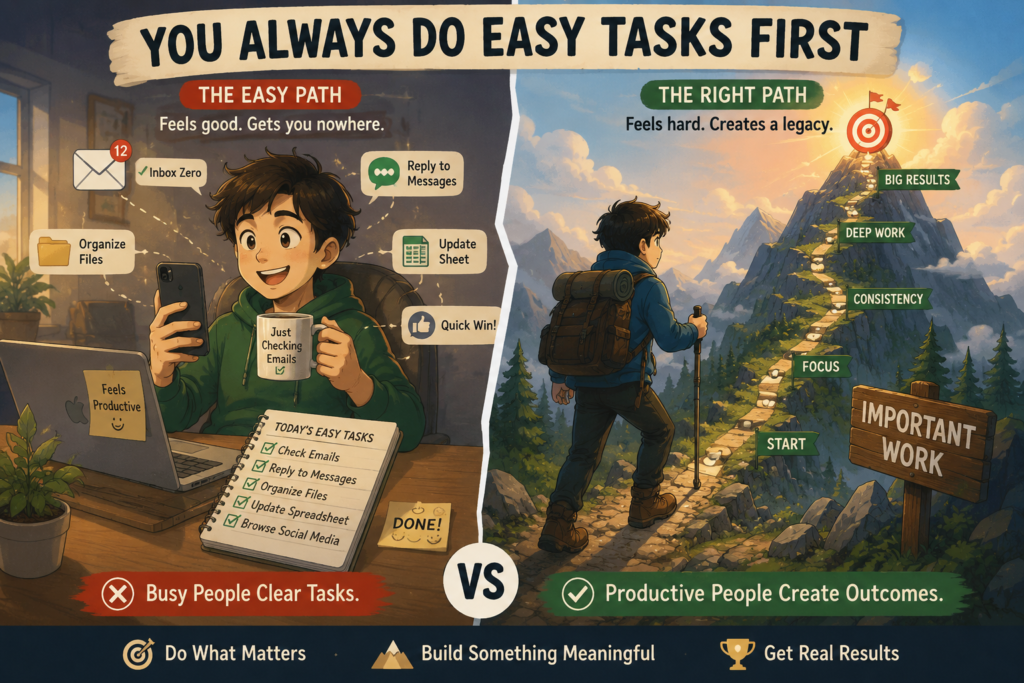
Sign #4: You Always Do Easy Tasks First
Easy tasks provide quick wins.
Unfortunately, they rarely create meaningful progress.
Checking email feels productive.
Updating a spreadsheet feels productive.
Reorganizing files feels productive.
But these activities often prevent you from doing work that truly matters.
The Real Cost of Easy Tasks
Every hour spent on low-value activities is an hour not spent on high-impact work.
Over time, this creates a significant productivity gap.
How to Fix It
Use the “Eat the Frog” principle.
Complete your most important task before moving on to less important work.
Brian Tracy popularized this idea in his book ‘Eat That Frog’.
The core message is simple: tackle your most challenging and high-value task first before distractions and low-priority work take over your day.
You can explore the key lessons in our Eat That Frog Summary.
The best time to tackle challenging work is often early in the day when your energy and focus are highest.
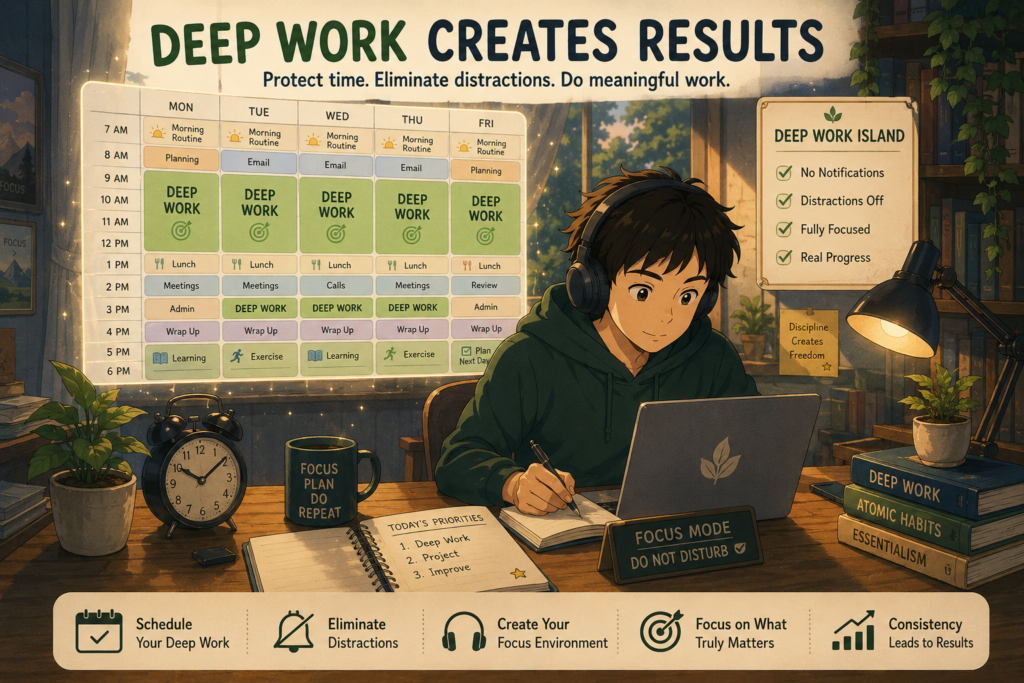
Sign #5: You Rarely Schedule Deep Work
Many people schedule meetings but never schedule focused work.
As a result, deep thinking gets pushed aside by urgent requests and daily distractions.
What Is Deep Work?
Deep work is a concept popularized by Cal Newport.
It refers to focused, distraction-free work performed at the limits of your cognitive abilities.
Examples include:
- Writing
- Coding
- Strategic thinking
- Learning complex skills
- Creating content
“Clarity about what matters provides clarity about what does not.” — Cal Newport
Why It Matters
Deep work produces disproportionately valuable results.
Cal Newport’s Deep Work framework provides practical strategies for protecting focus and producing high-value work.
Most breakthrough ideas and meaningful accomplishments come from periods of sustained concentration.
How to Fix It
Block 60–90 minutes of uninterrupted focus time every day.
Treat it as seriously as an important meeting.
Building consistent focus blocks is easier when you rely on systems rather than motivation.
In Atomic Habits, James Clear explains that lasting behavior change comes from creating effective systems and routines rather than waiting for motivation to appear.
Our Atomic Habits Summary explores this idea in more detail and highlights practical strategies for building habits that support deep work and long-term productivity.
Sign #6: Everything Feels Urgent
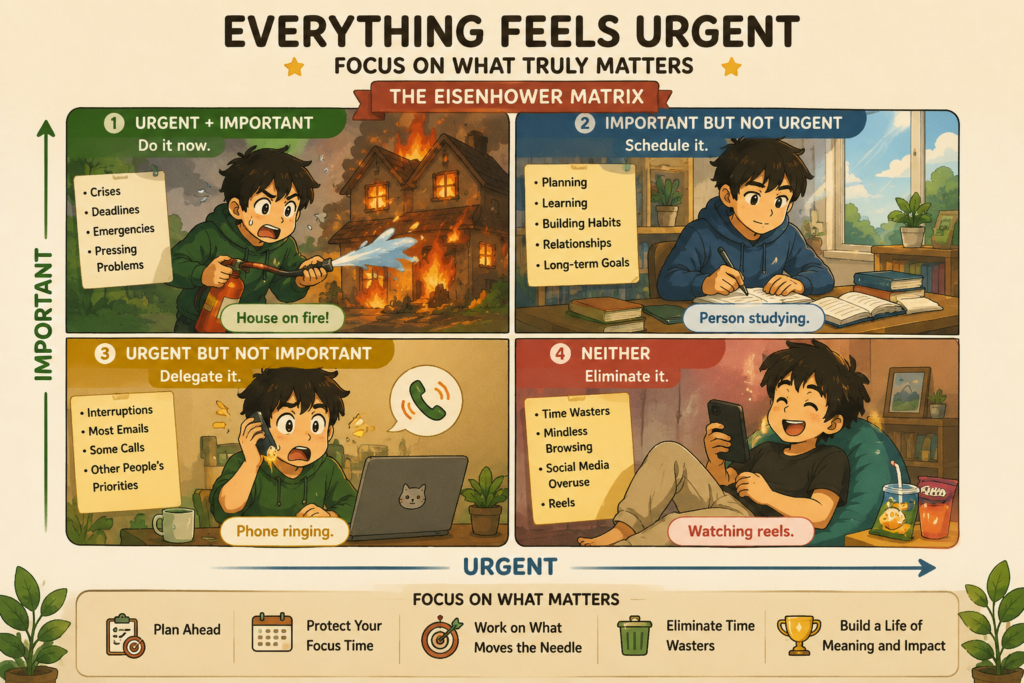
When everything is urgent, priorities disappear.
You spend your day responding to the loudest demands instead of the most important ones.
The Urgency Trap
Urgent tasks create pressure.
Important tasks create progress.
Unfortunately, urgent tasks usually win.
“What is important is seldom urgent and what is urgent is seldom important.” — Dwight Eisenhower
How to Fix It
Use the Eisenhower Matrix:
Urgent and Important
Do immediately.
Important but Not Urgent
Schedule.
Urgent but Not Important
Delegate.
Neither Urgent nor Important
Eliminate.
Most long-term success comes from consistently investing time in important but non-urgent activities.
Sign #7: You Measure Activity Instead of Results
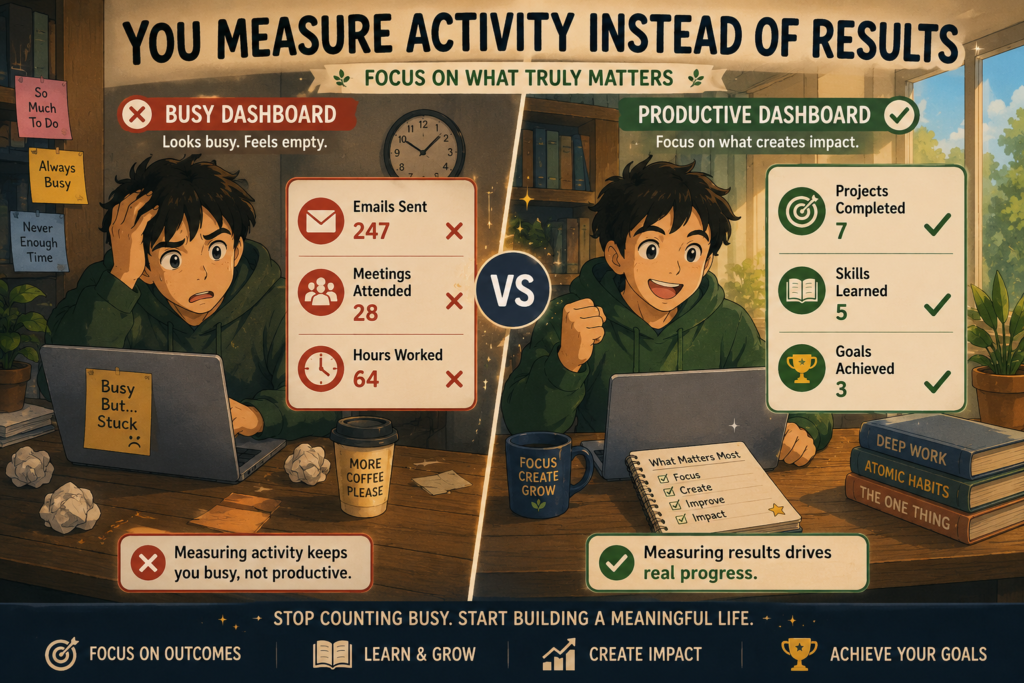
Many people evaluate productivity using inputs.
Examples include:
- Hours worked
- Emails sent
- Meetings attended
But productivity should be measured using outputs.
Examples include:
- Projects completed
- Revenue generated
- Articles published
- Skills acquired
- Problems solved
Why This Matters
Activity can create the illusion of progress.
Results provide evidence of progress.
This is one of the key ideas James Clear explores in ‘Atomic Habits’. He explains that small improvements compound over time and eventually produce extraordinary results.
Our Atomic Habits Summary highlights the book’s most powerful lessons and practical strategies for building habits that lead to lasting success.
How to Fix It
At the end of each day, ask:
What meaningful result did I create today?
This simple question shifts attention from effort to outcomes.
How to Stop Being Busy and Start Being Productive
If you recognize yourself in several of these signs, don’t worry.
Most people experience them at some point.
The goal isn’t perfection.
The goal is awareness.
Start small.
Choose one area to improve this week.
Maybe it’s reducing notifications.
Maybe it’s scheduling deep work.
Maybe it’s focusing on your top three priorities.
Small improvements compound over time.
The same way poor habits slowly reduce productivity, better habits gradually transform it.
Final Thoughts
Being busy is easy.
Productivity requires intention.
The next time you finish a long day, don’t ask: “How busy was I?”
Ask: “How much progress did I make?”
The answer will tell you far more about your productivity than the number of hours you worked.
Focus less on activity.
Focus more on outcomes.
That’s where meaningful progress begins.
If you’d like to continue improving your focus, habits, and productivity systems, explore more guides and book summaries on Skills4Productivity.
Frequently Asked Questions
What is the difference between being busy and being productive?
Being busy means spending time on activities. Being productive means making meaningful progress toward important goals.
How can I become more productive?
You can become more productive by:
- Prioritizing important work
- Scheduling deep work blocks
- Reducing distractions
- Measuring outcomes instead of activity
Why do I feel busy but accomplish nothing?
Many people spend too much time on low-value tasks, meetings, notifications, and planning instead of focused execution.
How can I stop being busy and become productive?
Prioritize important work, schedule deep work sessions, reduce distractions, and measure outcomes instead of effort.
Why is deep work important?
Deep work allows you to focus without distractions and produce higher-quality results in less time.
Continue Reading
- Atomic Habits Summary
- Deep Work Summary
- Eat That Frog Summary
- The ONE Thing Summary
- How to Learn Better
- Best Books on Discipline
Disclosure: This article may contain affiliate links. If you purchase through these links, we may earn a commission at no additional cost to you.